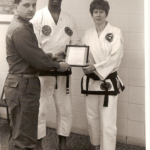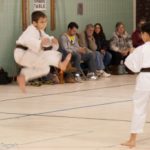
Is your child a black belt? Is your child a whatever “belt” at the local martial arts school, and wonder if they have the skills to defeat an attacker their size, or one much larger?
When you see schools promote a kid (someone under 16) to a black belt, and they are still timid (showing a lack of courage or confidence, and are easily frightened.) Then 100% of the time, they aren’t ready for that belt.
I was a young black belt myself, and timid was never a word associated with me by the time I was at the intermediate stage of belt progression. That’s nothing special; that’s the standard, or rather, that should be the standard. But today, we see timid black belts. Now, I don’t want people to confuse “kind” with timid, even though I am considered “kind” most of the time, but actually timid, is where the “black belt” doesn’t look people in the eyes when talking, doesn’t introduce themselves with any confidence, and will still look to their parents or other adults for valdiation in public.
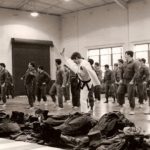
In the 70s and until the mid-80s, there were no kids’ classes in the majority of martial arts schools. There were just classes, at such and such time. If you were accepted into a class, you were expected to meet the standards set by all the other students. And since most of them were adults and older teens, well, that in itself is the first test for young students like I was then. If you didn’t block, which was often painful, then you learned really quickly the other actions like dodge, check, and move!
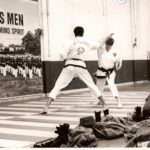
Sparring until we saw more kids join in class was always done with adults, and trust me, they didn’t take kindly to a kid being in their class, so it was not uncommon for them to let that kid know it. Back in the early 80s, there was a dental student who was a brown belt, was going to dental school, and he didn’t like that the instructor’s nephew and I were the same rank, and the instructor’s nephew was a few years younger than I was. And that brown belt, who was also rather tall, would throw his kicks as hard as he could; he loved to send us lightweights flying.
My instructor wasn’t a very tall man himself; he was at least a head shorter than this brown belt adult, and after allowing this brown belt to kick the snot out of us a few times, the instructor then gave us the instructions on what to do when you have a stronger and much taller opponent. It took a few tries, but both of us got it, and we used it to great effect, enough so that the brown belt no longer tried to kick us out via the walls of the dojang.
We, as young students, were taught that way because you have to remember, until the mid-80s, (although some markets were inviting kids into class further back), martial arts students were almost always “military age males.” And, we were taught that failing at a task was ok, as long as you kept progressing until you got it right, and sadly, we don’t see that much in today’s martial arts instruction; it’s more of, we will promote you and keep the time line going and even cash flow going rather than making sure the techniques or concepts are learned.
Today, we use the term “McDojo” for schools that crank out many high-ranking kid black belts, but for myself, it’s not the color of the belt, but more of the techniques of the students, and while they do cross over often, they aren’t the same. Like many locations, I teach in markets that have other schools nearby, and some that have none within 30 or more miles. When I run into another school’s students, I can tell within 30 seconds where they are based on our standards, and far too often, it doesn’t make sense where they are at.
I have run into other schools’ black belts and color belts, as you do in the community. I even have other schools’ previous students sign up for our program. As a courtesy, I always allow them to keep their rank from their other school, with the stipulation that they can’t advance until they learn our program, up to their current rank from the other school. If they have a good base, then they will progress through our program a bit faster than a brand new student, and will “catch up” to their current rank in short order, if they don’t have a good base, then it will take them about the same time as a new student in our program.
One of the first glaring facts for me, actually, isn’t their skills at fighting or defense, I simply have them perform their current pattern (form), and that alone tells me if they are “whatever rank” they are from the other school. If they do a downward block, and it’s loose and goes outside the hips, if the stance is supposed to be a forward, aka front stance. The vast majority of the time, they don’t know what full, half, or side facing is, though they mostly can work it out, but in their patterns, they don’t show it. I can often tell by their cadence if their techniques are smooth or choppy in performance.
These things tend to show up when they don’t have the muscle memory of a student consummate of that rank. You see this in any combat-type sport like boxing, BJJ, and others. A boxer may be throwing powerful punches, but their rhythm looks like they’re bouncing around like a chicken with its head cut off, very jerky, and not a smooth transition between one technique and the other; then they haven’t taken the time to get that muscle memory that a seasoned student or black belt should have. Someone who does BJJ or similar won’t be able to transition from one move to another with any fluidity or not at all, if they don’t have that muscle memory and practice upon practice!
What then becomes apparent is the fact that their skills at actual combat are weak or less than favorable at defending themselves, let alone anyone else. A black belt isn’t some “superman or woman”; they are not indestructible like Captain America or Iron Man, they are flesh and bone like anyone, but, at the bare minimum, they should be able to 1st avoid a fight and have those skills. Second, they should be able to absolutely control a physical confrontation with someone of like size.