THE GENERALS
A Study of Taekwon-Do History – Part I
Park Chung-hee (박정희) and Choi Hong-hi (최홍희)
The history of Taekwon-Do has been discussed and debated for decades. Depending on what one reads, Taekwon-Do is described as being over 2,000 years old, as the creation of a committee, or as the work of a single individual. The truth is more nuanced.
While no single person can honestly claim to have created Taekwon-Do in its entirety, history clearly shows that a relatively small group of determined men shaped what became modern Taekwon-Do. This article examines two of the most influential among them.
Much has already been written about the pioneers and personalities who influenced Taekwon-Do’s development. Rather than retell every aspect of their lives, this article focuses on two Korean military figures whose influence reached far beyond the martial arts and helped shape both modern Korea and the international spread of Taekwon-Do.
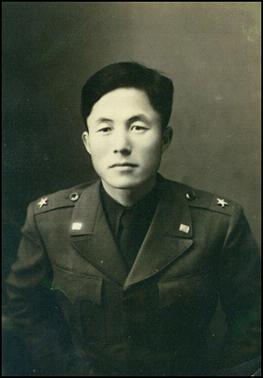
GEN CHOI 1952
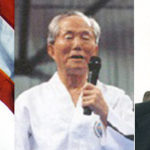
General Choi Hong-hi
Most martial artists recognize General Choi Hong-hi as the principal founder of modern Taekwon-Do and the founder of the International Taekwon-Do Federation (ITF). Historians of Korea also recognize another military figure who would profoundly influence the nation’s future General Park Chung-hee, who later became the third President of the Republic of Korea.
At first glance, these two men appear to have followed very different paths. Yet they shared far more than many people realize.
Both were ardent Korean patriots.
Both were born during the Japanese occupation of Korea.
Both became generals in the Republic of Korea Army.
Both viewed Taekwon-Do as a vehicle for promoting Korean culture, discipline, identity, and national pride throughout the world.
Yet despite these similarities, the relationship between the two men was often strained.
Readers of General Choi’s autobiography, Taekwon-Do and I, will recall his criticism of General Park. Likewise, historical accounts suggest that President Park held little affection for General Choi. Why?
Perhaps the simplest answer is that they were remarkably alike.
They were, as the saying goes, “cut from the same cloth.”
General Choi was born in November 1918 in the far northern region of what was then a unified Korea under Japanese rule. General Park was born just over a year earlier, on September 30, 1917, in the far south of that same occupied nation.
Even their births lend themselves to an interesting symbolic comparison.
Park was born during the Chinese Zodiac Year of the Snake, while Choi was born during the Year of the Horse. Traditional Korean and Chinese interpretations often describe those born in the Year of the Horse as determined, energetic, and stubborn, while those born in the Year of the Snake are frequently described as strategic, patient, and calculating. Whether one accepts such symbolism or not, many historians have noted personality traits in both men that seem to fit these traditional descriptions.
The comparison of Yin and Yang is equally appropriate.
Many people mistakenly believe Yin and Yang simply represent “good versus evil” or “positive versus negative.” In traditional East Asian philosophy, however, Yin and Yang describe complementary forces that exist only because of one another light and shadow, strength and flexibility, action and restraint.
One cannot exist without the other.
Just as there can be no rainbow without rain, history often advances through the interaction of opposing personalities. Park and Choi frequently stood on opposite sides of important issues, yet together they helped shape modern Korea and modern Taekwon-Do.
 Park Chung-hee’s Early Years
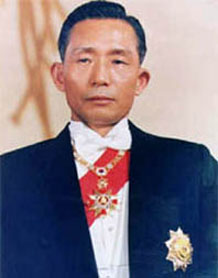
Park Chung-hee was born on September 30, 1917, only seven years after Japan formally annexed Korea in 1910. During his childhood there was neither North Korea nor South Korea only a single Korea governed by Imperial Japan.
The world in which Park and Choi grew up is difficult for modern readers to imagine. Although they shared the experience of growing up under Japanese occupation, their personal circumstances differed considerably.
Park’s father, Park Song-bin (박성빈), had participated in the Donghak Peasant Revolution (동학농민운동) of 1894. Originating in Gobu in southern Korea, the movement protested widespread government corruption, abusive taxation, and social inequality during the late Joseon Dynasty.
The uprising ultimately became much larger than a domestic rebellion.
When the Joseon government requested military assistance from Qing China to suppress the revolt, Japan responded by sending its own forces. This confrontation helped ignite the First Sino-Japanese War, setting into motion the events that eventually led to Japan’s complete annexation of Korea.
Although portions of the movement’s original demands were eventually addressed, many leaders continued resisting Japanese influence. As Japan’s control expanded, numerous leaders of the rebellion were executed. Others, including Park Song-bin, were arrested. He survived largely through good fortune.
Survival, however, came at a tremendous cost.
The Park family belonged to the Yangban (양반) class the traditional aristocratic elite of the Joseon Dynasty. Members of this privileged class enjoyed exemptions from certain taxes and civic obligations.
For a Yangban to side with common farmers against the established order was viewed as disgraceful by many members of his own social class.
Park Song-bin’s father believed his son’s actions had brought shame upon the entire family. As punishment, he exiled him to his wife’s hometown, where the family struggled to survive on poor farmland that produced little income.
By the time Park Chung-hee was born, his family had endured years of hardship and disappointment at the hands of successive Korean governments. His father’s distrust of the old political system profoundly influenced the environment in which young Park was raised.
Like many Koreans of his generation, Park grew up knowing only Japanese rule.
By the time he entered school, Japanese educational reforms had been firmly established throughout Korea. Students studied the Japanese language, Japanese history, and increasingly military-oriented subjects, including kendo, marksmanship, bayonet training, and infantry tactics.
Park excelled in these disciplines.
Even as a student, he reportedly told classmates that he intended to become an army general. The only army he had ever known was the Imperial Japanese Army; there was no independent Korean military for him to admire.
Like many Koreans seeking advancement during this period, Park adopted a Japanese name Takagi Masao (高木正雄).
In 1941, he volunteered for service in the Manchukuo Imperial Army, the military force of the Japanese puppet state of Manchukuo in northeastern China. He entered the Changchun Military Academy, graduating first in his class in 1942. He then continued his education at the Imperial Japanese Army Academy near Tokyo before returning to Manchuria, where he served until Japan’s surrender in August 1945.
The collapse of the Japanese Empire would dramatically alter Park’s future. The young officer who had been trained to serve Imperial Japan would soon redirect those same military skills toward building the armed forces—and eventually the government—of a newly independent Republic of Korea.
Notes
General Choi Hong-hi (최홍희 / 崔泓熙) was known by the pen name Chang Hon (창헌), a name later adopted for the ITF system of patterns. Choi is often remembered as seeing himself among the nation’s leaders and policymakers.
Park Chung-hee (박정희 / 朴正熙) was also known by the courtesy name Jung-su (중수). Although he rose to become President of the Republic of Korea, Park frequently portrayed himself as a practical man rooted among the Korean people—”among the trees,” rather than within the halls of power.