UPDATED 03 OCT 2017 09 May 2026
Originally Published on: Aug 26, 2000 @ 12:49
This page is to provide greater insight into the etymology and historical meaning behind the names selected by Gen. and other early pioneers to promote the Chang Hon style of Taekwon-Do.
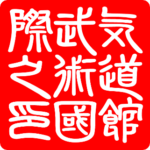
The first set of characters shown are Korean (Hangul), the second set are the corresponding Chinese characters (Hanja), and the third set represents the older seal script form of the Chinese characters. These seal script versions may date anywhere from approximately 220 B.C. through portions of the Ming Dynasty era (up to around 1600 A.D.).
Seal script was traditionally used for official seals, calligraphy, inscriptions, and formal documents throughout much of East Asian history. Because of the age and evolution of certain characters, some terms may not have surviving or commonly recognized seal script forms available today.
By studying these writings together, students gain a deeper appreciation not only for the physical techniques of Chang Hon Taekwon-Do, but also for the linguistic, philosophical, and historical roots that helped shape traditional Korean martial arts.

“Heaven Lake” is a crater lake located on the border region of the DPRK (North Korea) and China. It rests within the caldera atop Paektu Mountain (Baekdu-san), the highest mountain on the Korean Peninsula. The mountain forms part of both the Baekdudaegan mountain system of Korea and the larger Changbai mountain range extending into China. For centuries, Paektu Mountain and Heaven Lake have held deep cultural, historical, and spiritual significance within Korean tradition. The area is often associated with national identity, ancient legends, and the origins of Korean civilization and martial spirit. Because of this symbolism, references to Paektu Mountain frequently appear within traditional Korean martial arts history, philosophy, poetry, and terminology.
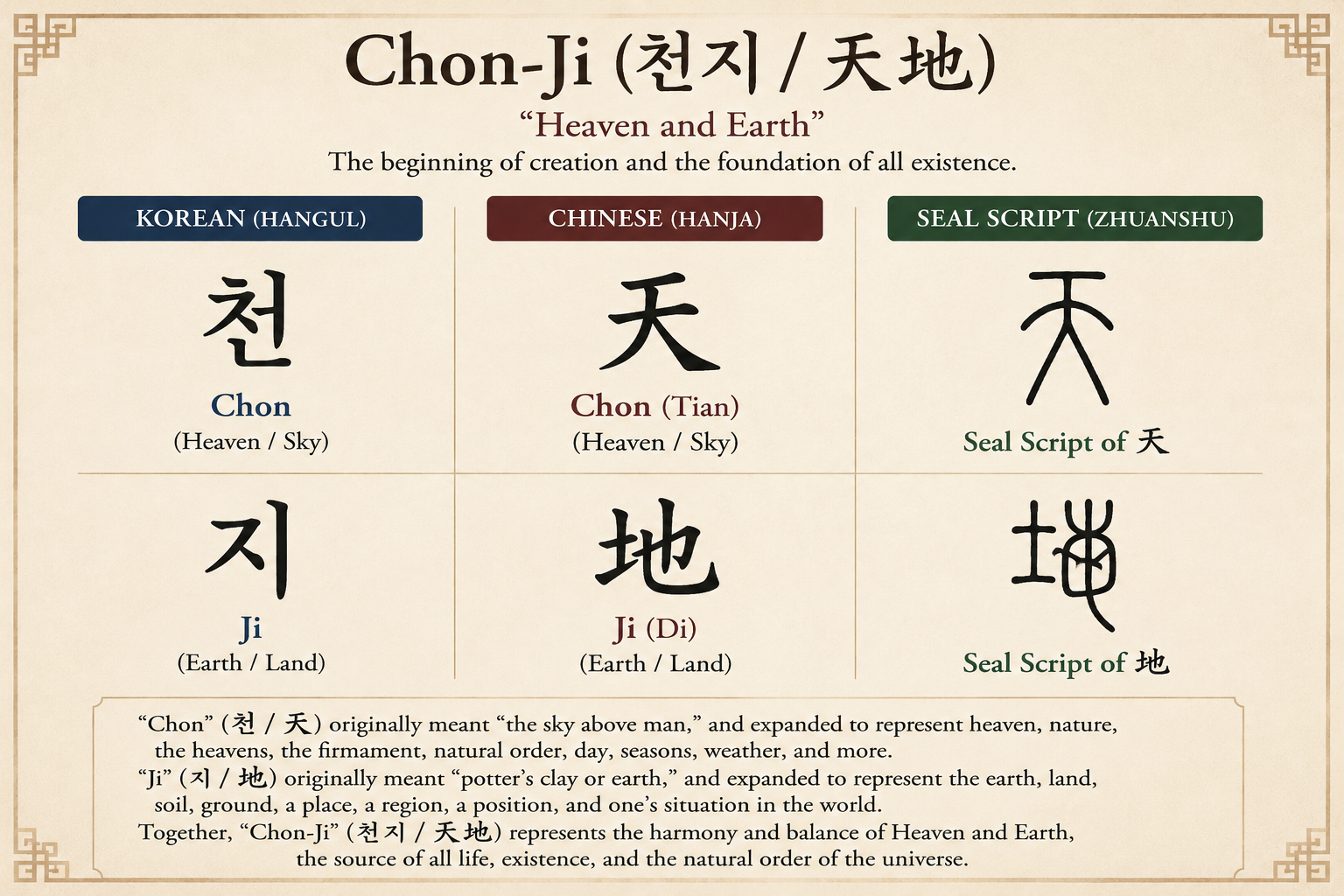
Chon-Ji 천지 / 天地
The word “Chon” (천 / 天) originally carried the meaning of “the sky above man,” but over centuries its usage and philosophical implications expanded dramatically. Depending upon context, it has come to represent concepts such as: the sky, the heavens, the vault of heaven, the firmament, Nature, God, Heaven, natural order, that which is not artificial, a day, the seasons, climate, weather, father or husband, and even something essential or indispensable to life.
The word “Ji” (지 / 地) originally referred to “potter’s clay” or “earth,” but likewise evolved into a much broader concept. Over time it came to signify the earth itself, land, soil, ground, a region, territory, belt, locality, position, place, or one’s situation within the world.
Together, “Chon-Ji” (천지 / 天地) is commonly interpreted as “Heaven and Earth,” but within traditional East Asian philosophy the meaning is far deeper than a simple literal translation. It symbolizes the creation of the world, the duality and balance of existence, and the relationship between the cosmic heavens above and the earthly realm below. Within Chang Hon Taekwon-Do, Chon-Ji Tul is therefore regarded as the symbolic beginning — representing the creation of the world and the dawn of human history.
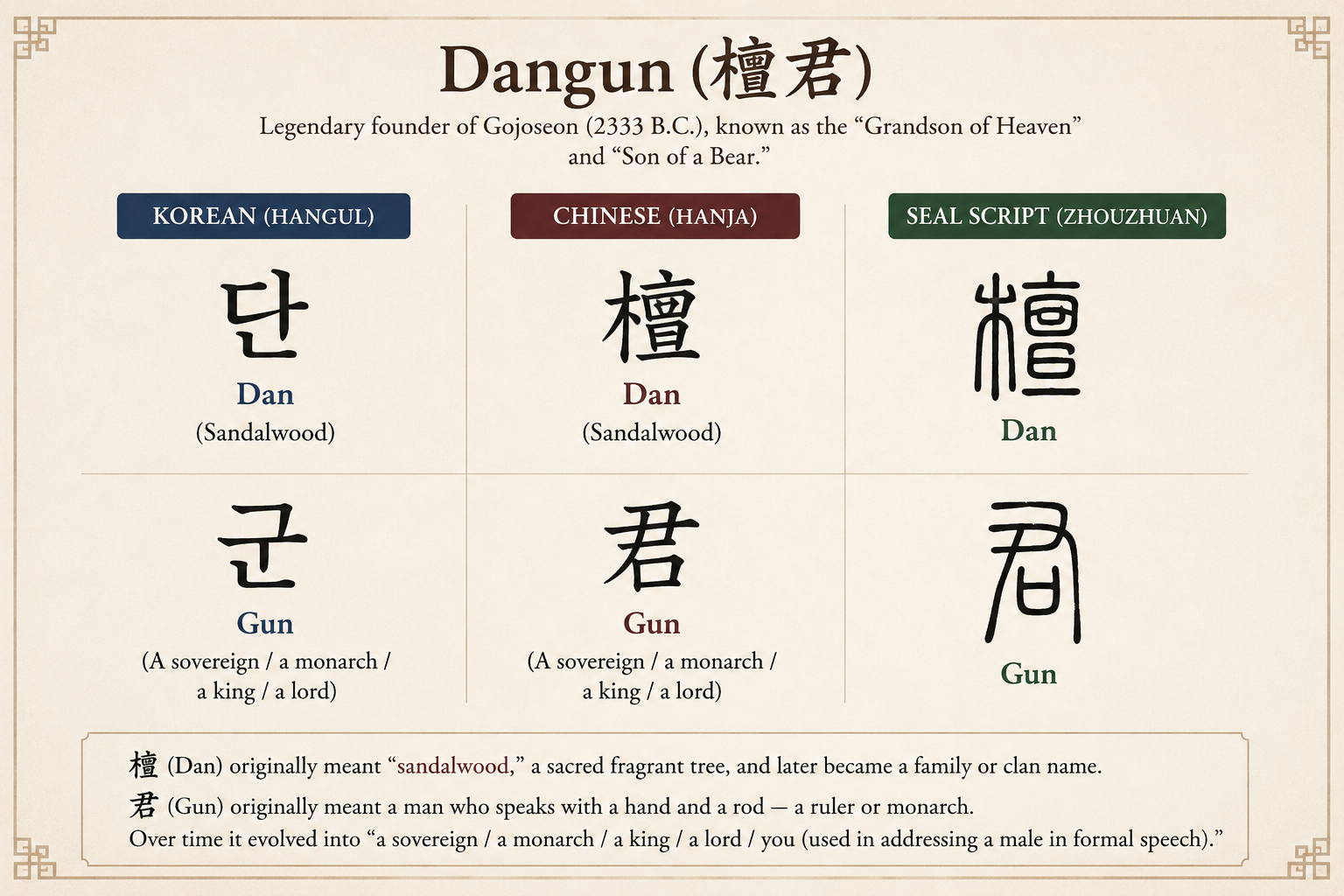
Dan-Gun 단군 / 檀君
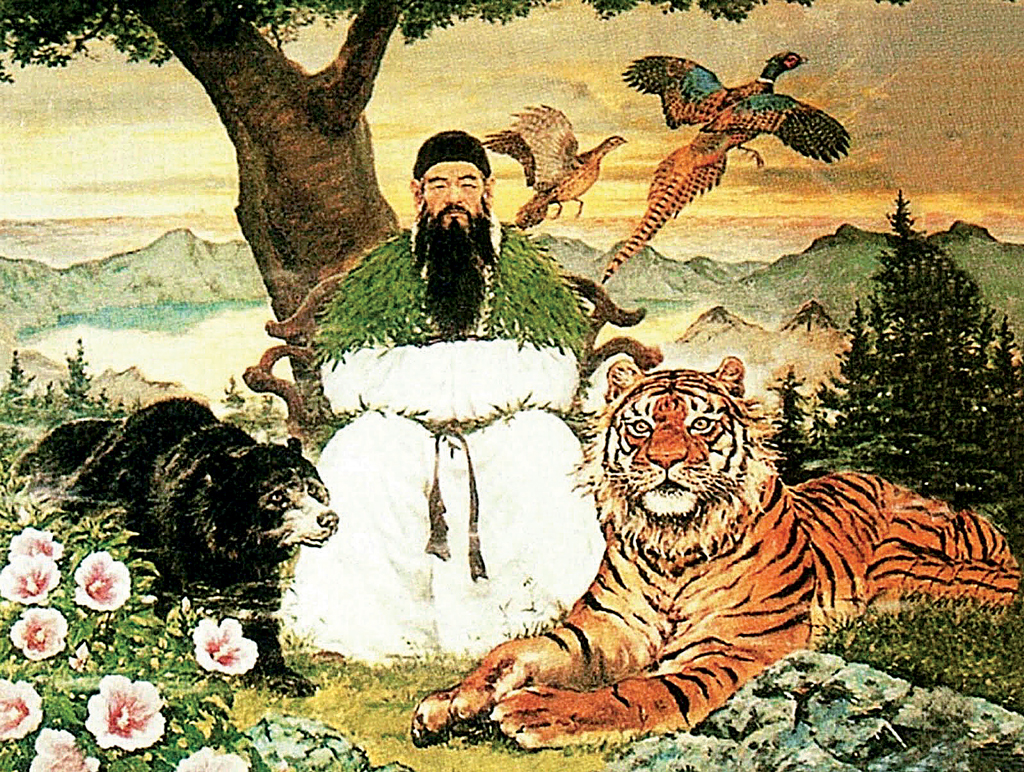
Dangun Wanggeom (단군왕검; 檀君王儉) is the legendary founder of Gojoseon, regarded as the first Korean kingdom, traditionally said to have been established in 2333 B.C. The kingdom is believed to have encompassed areas of present-day Liaoning, Manchuria, and the northern regions of the Korean Peninsula. Within Korean tradition, Dangun is often described as the “Grandson of Heaven” and the descendant of a divine lineage. According to the legend, his father was Hwanung (환웅; 桓雄), a heavenly prince who descended from the heavens, while his mother was originally a bear transformed into a woman after enduring trials of devotion and patience. This connection gave rise to the traditional description of Dangun as both the “Grandson of Heaven” and the “Son of the Bear.” The earliest surviving written account of the Dangun legend appears in the 13th-century text, compiled by the Buddhist monk Iryeon. The text references earlier sources, including China’s Book of Wei and a now-lost Korean historical work known as Gogi (고기; 古記). Dangun occupies a unique place in Korean culture, history, and national identity. His story symbolizes the divine origins, unity, and enduring spirit of the Korean people, and references to Dangun, Paektu Mountain, and the heavenly origins of Korea frequently appear throughout traditional Korean martial arts philosophy, literature, and symbolism.
The name “Dan” (단 / 檀) originally referred to “sandalwood” or a sacred fragrant tree. In ancient Chinese usage it also became associated with family or clan names, eventually taking on broader symbolic and cultural significance within Korean tradition through the name Dangun (檀君).
The word “Gun” (군 / 君) originally described a man who ruled or governed, symbolically represented as one who spoke with authority while holding a rod or staff of office. Over time, the meaning evolved and broadened into concepts such as: sovereign, monarch, king, ruler, lord, nobleman, or a respected male figure. In formal classical speech, it could also be used as an honorable form of address similar to “sir” or “you” when speaking respectfully to a male.
Together, “Dangun” (檀君) is commonly interpreted as “Lord Dan” or “King Dan,” though within Korean tradition the name carries far deeper cultural and symbolic meaning connected to the legendary founding of Gojoseon and the origins of the Korean people.
Do-San도산 / 島山
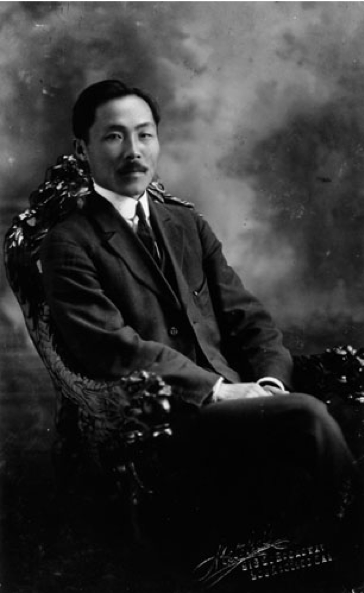
Ahn, Chang ho
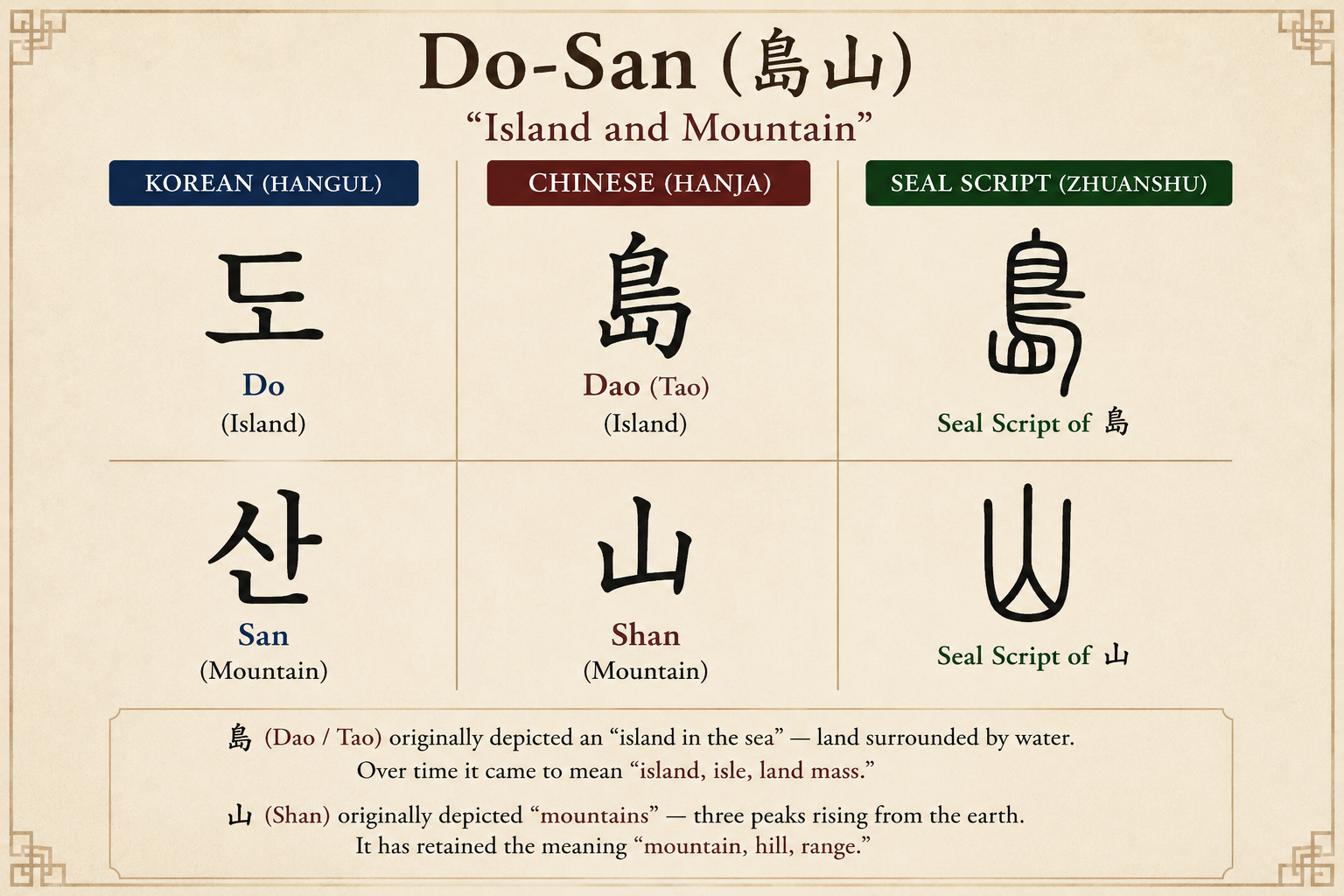
The word “Do” (도 / 島) originally referred to the image or aspect of a mountain rising from the sea — an island formed by elevated land surrounded by water. Over time, the meaning evolved and simplified into “an island” or “an isle.”
The word “San” (산 / 山) originally depicted multiple mountain peaks rising upward from the earth. Its meaning has remained largely consistent through history and is now commonly understood as “mountain,” “hill,” or “mountain range.”
Together, “Do-San” (도산 / 島山) can be understood literally as “Island Mountain,” though within Korean history and Chang Hon Taekwon-Do it is most widely recognized as the pen name of the Korean patriot and educator.
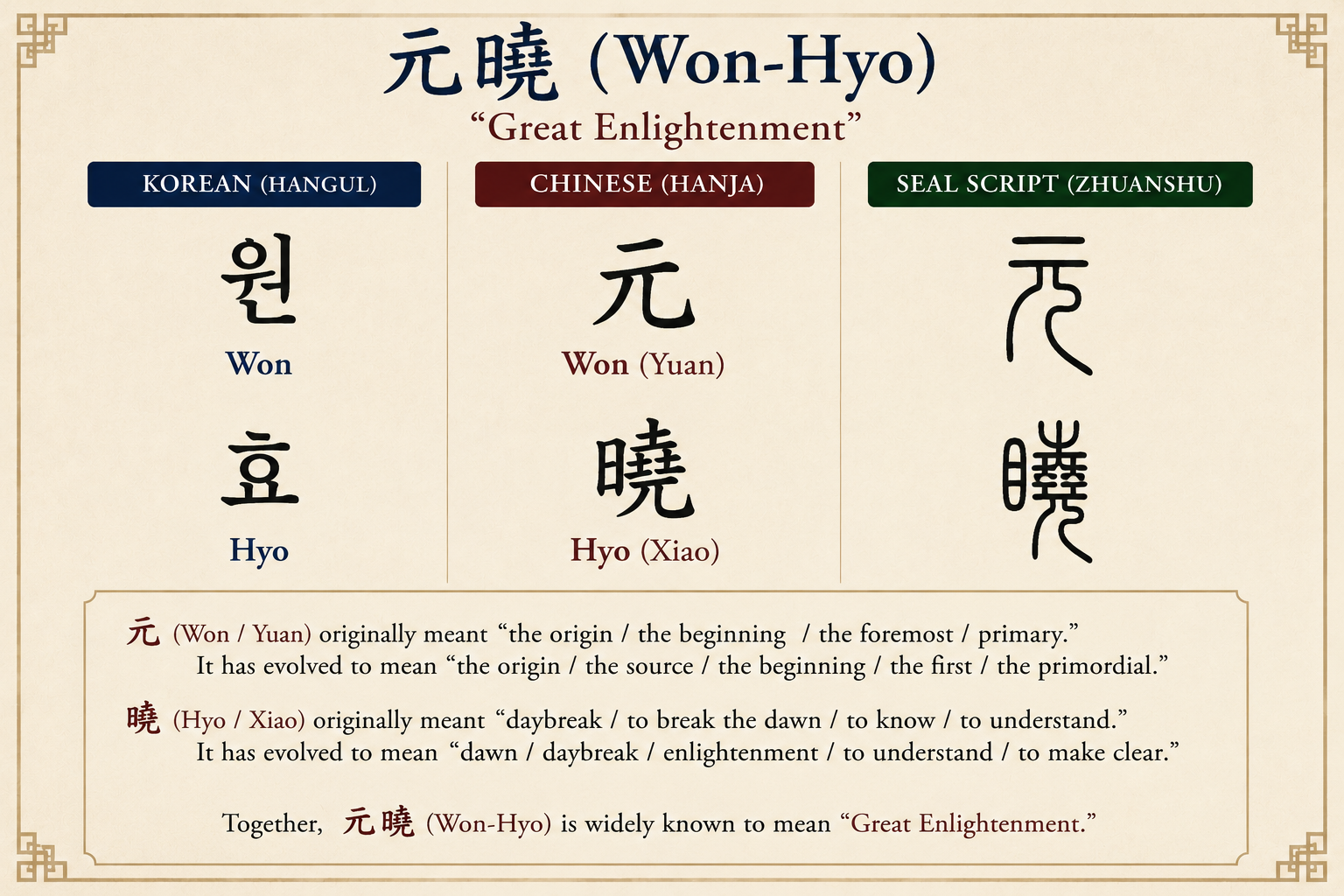
Won-Hyo 원효 / 元曉
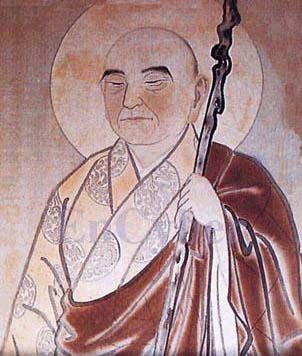
Monk Won-Hyo
The word “Won” (원 / 元) originally depicted “a man with the head accentuated,” symbolizing prominence, primacy, or origin. Over time, its meaning expanded and evolved into concepts such as: the beginning, the first, original, primary, the head, chief, eldest, great, or foundational. In various historical and cultural contexts it also became associated with currency (“won” or “yuan”), the sixty-year cycle of Chinese astrology, and the Yuan Dynasty of China.
The word “Hyo” (효 / 曉) originally referred to “daybreak” or “dawn,” symbolizing the arrival of light and understanding after darkness. Its meaning later broadened to include: to tell, to explain, to know, to understand, to awaken, or enlightenment through understanding.
Together, “Won-Hyo” (원효 / 元曉) carries the symbolic meaning of “Original Enlightenment” or “Great Enlightenment,” and is associated with the famous Korean Buddhist monk, whose teachings greatly influenced Korean Buddhism and philosophy.
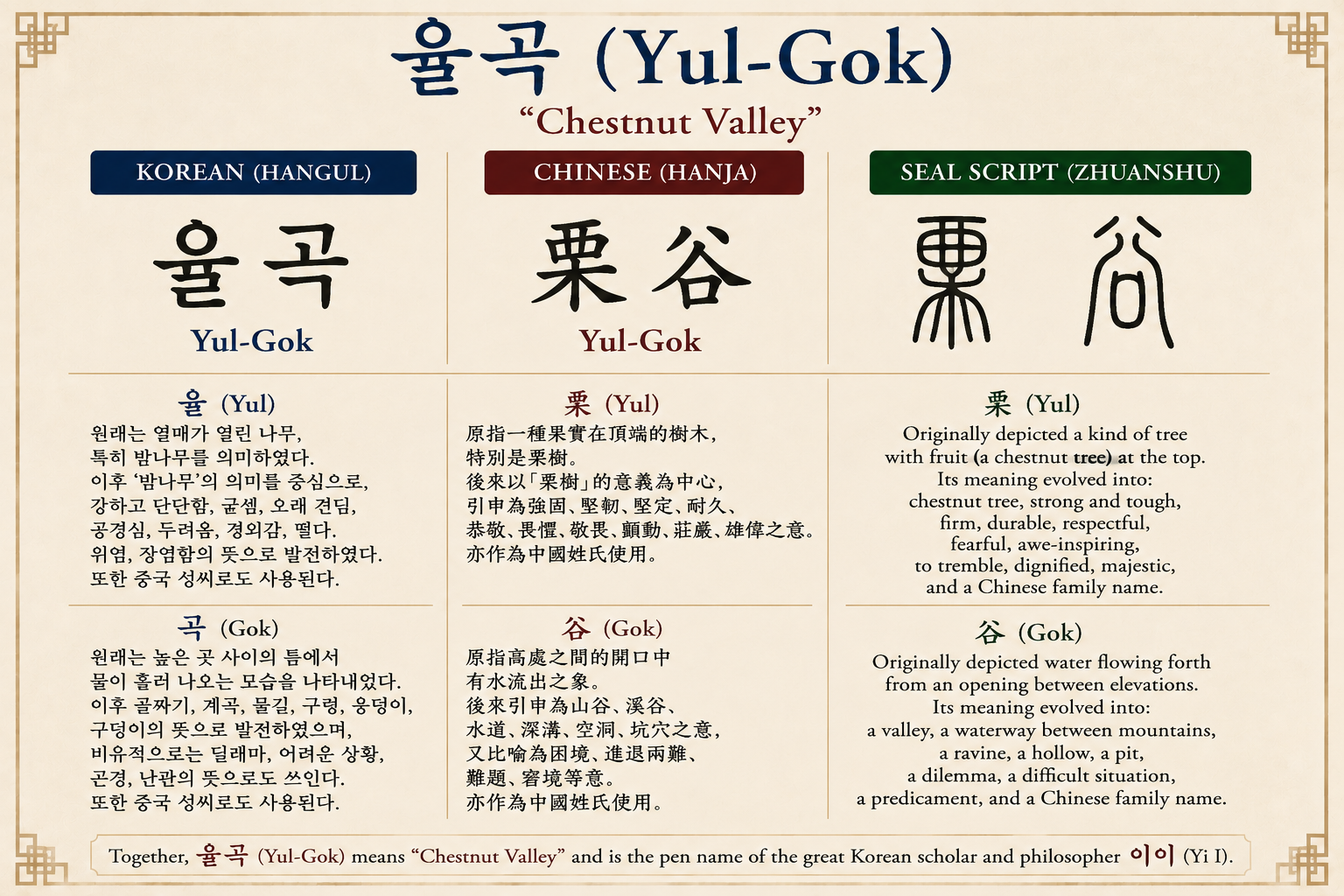
Yul-Gok 율곡 / 叔獻

Yi I 이이 李珥, December 26, 1536 – February 27, 1584) was one of the two most prominent Korean Confucian scholars of the Joseon Dynasty,
The word “Yul” (율 / 栗) originally appears to have depicted a type of tree bearing fruit, likely associated with the primitive image of the chestnut tree. Over time, its meaning evolved into “chestnut tree,” while also taking on symbolic qualities such as strength, toughness, firmness, durability, dignity, respectfulness, awe, majesty, and even trembling in fear or reverence. In some contexts, it also became recognized as a Chinese family name.
The word “Gok” (곡 / 谷) originally depicted water flowing outward through an opening between elevated landforms. Its meaning later broadened into concepts such as: a valley, a ravine, a hollow, a waterway between mountains, or a pit. Figuratively, it also came to represent a dilemma, difficult situation, hardship, or predicament. Like many classical characters, it additionally became used as a Chinese family name.
Together, “Yul-Gok” (율곡 / 栗谷) is commonly translated as “Chestnut Valley.” Within Korean history and Chang Hon Taekwon-Do, it is best known as the pen name of the renowned Korean scholar and philosopher.
Joong-Gun 중근 / 重根

안중근 安重根 An Jung-geun
Joong meant “man ? holding heavy bag ? full of dirt ? – heavy” and now means “heavy / weighty / much / to weigh / weight / difficult / serious / grave / severe / important / significant / to value / to emphasize” and Gun meant “part of a tree ? – root” and not today means “he root of a plant / a base / a foundation / the beginning, cause, or source of something / ( mathematics ) the root of a number / ( chemistry ) radical / a piece ( of string, rope, etc. ) / a (stick, spear or thing of slender shape) / a Chinese family name”
Toi-Gye 퇴계 / 退溪
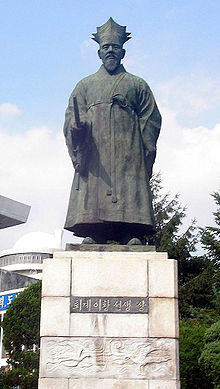
Yi Hwang (1501–1570) is one of the two most prominent Korean Confucian scholars of the Joseon Dynasty, the other being his younger contemporary Yi I (Yulgok).
Toi meant “n the road ??(??) to walk away ? from the sun ? – retreat (not ?)” and now has come to mean “to retreat / to withdraw / to recede / to regress / to retrogress / to recoil / to shrink / to bow out / to retire / to send back / to give back / to return” and Gye meant “of water ?? – mountain stream” and now “a mountain stream.”
Hwa-Rang 화랑 / 花郞

Hwarang are mainly found in the histories Samguk Sagi (1145) and Samguk Yusa (ca. 1285), and the partially extant Haedong Goseungjeon (1215), a compilation of biographies of famous monks of the Three Kingdoms.
Hwa meant “a type of plant ?? – flower” and now has come to mean “a flower / a blossom / a flowering plant / a prostitute / prostitution / as in??-smallpox / varicolored / fireworks / to spend / to expend” and Rang means “an official rank in ancient times / a man / the husband / the beau / the master ( as opposite to servants ) / a Chinese family name”
Choong-Moo 충무 / 忠武
Choong meant “related to the heart ?? – loyalty” and now means “faithful / loyal / sincere / patriotic / constant / loyalty / sincerity / devoted / honest ( advice, etc. )” Moo meant “to walk ? with a weapon ? – military” and now means “force / military / warlike / martial / footprints / steps / the length of half a pace / the string of an ancient hat / to inherit / a Chinese family name”
Kwang-Gae 광개 / 廣開
Kwang meant “aspect of building ? – wide spacious” and now means “wide / broad / spacious / extensive / to stretch / to extend / Kwangtung or Kwangsi” Gae meant “hands ? taking off the bolt ? and (opening) the door ?” and now means “to open / to drive / to begin / to start / to reveal / to disclose / to state / to explain / to found / to expand / to eliminate / to divide into / to write down / to list / to undo / to unfold / to wind off / a carat / to run ( a shop or business )”
Po-Eun 포은 / 圃隱
Po meant “enclosed garden” and now means “a vegetable garden ( or plot ) / a nursery / an orchard / a plantation / a planter / a gardener” Eun meant “hidden behind a wall ??” and now means “hidden / concealed / secret / mysterious / dark / obscure / not evident or obvious / to retire / to reject public life / to live like a hermit / painful / grievous / a riddle / destitute / poor / to examine and study / a low wall / a Chinese family name”
Gae-Baek 계백 / 階伯
Gae meant having to do with a wall or slope?? – steps – rank, now meaning a way leading to the main hall / a flight of steps or stairs / a grade or a rank / to rely on / alternate ?.Baek meant type of a person ?? – uncle and now means one’s father’s elder brother / an uncle / a rank of the nobility – a count.
Eui-Am 의암 / 義菴
Eui meant probably a sacrifice of a sheep ? and products of the field ? – generous, and now means “justice / righteousness / generosity / charity / philanthropy / chivalry / meaning / connotations / unreal / artificial / false / a Chinese family name.”
Juche 주체 (主 體) 


Juche 주체, usually left untranslated,or translated as “self-reliance”, is the official state ideology of North Korea, described by the government as Kim Il-sung’s “original, brilliant and revolutionary contribution to national and international thought”.
Ju meant “oil lamp made of clay ? which the “leader” holds” and now means “a master / a leader / a chief / a host / Jesus Christ / God / Lord / to officiate at / to preside over / to take charge of / main / chief / primary / principal” and Che meant “related to bones ? – body” and now means “the body / shape / form / an entity / a unit / a style / a fashion / a system / substance / essence / theory (as opposed to practice).”
Ko-Dang 고당 (古堂) 

Ko meant “the highest ? respect ? – honor” and now means “to honor / to respect / to revere / to adore / to worship / to venerate / to esteem / high / lofty / noble / dignified / exalted / a Chinese family name” and Dang meant “A high building” and now has come to mean “high / tall / of a high level or degree / above the average / lofty / a Chinese family name.”
Sam-Il 삼일 (三一) 

Sam meant “3 of something” and now means “three / third / thrice” and Il meant “Indicates one object” and now means “one / unit / single / alone / whole / throughout / a, an, the / to unite / once / as soon as / each / per / every time”
Yoo-Sin 유신 (庾信) 

Yoo meant “aspect of building ? – enclosed place” and now means “an enclosed place for storing grain / a unit of an ancient measure of capacity equivalent to 1 6 deciliters / a Chinese family name” and Sin meant “action of a person ?? – honesty” and generally means “honesty / truthfulness / faith / confidence / trust / believing / true / to believe or trust / an envoy / an emissary / a messenger / news / a message / information / word / a letter / mail / credentials / evidence / a pledge / a token / a sign / to let ( others do what they choose ) / free / easy / aimless / at will / at random / without a plan / regular periodical appearance.”
Choi-Yong 최영 (崔榮 ) 

Choi meant “the mountain ? only the bird ? can get to – high and steep” and now means “a Chinese family name / high and steep.” Yong meant “flowers (not fire ? or tree ?) – lush” and now generally means “glory / honor / luxuriant / lush / teeming / leafy / a Chinese family name.”
Yong-Gae 연개 (淵蓋) 

Yong meant “of water ?? – deep” and now “deep waters / a gulf / an abyss / profound (learning) / depth / profundity erudition / extensive / a Chinese family name” and Gae “like ? the grass ?? where you can hide and be covered ?” and now generally means “to cover / to hide / a lid / a covering / to build / to construct / to erect / to affix (a seal) / (an initial particle) now / then / but / because / (a particle indicating doubt) for / perhaps / possibly / about / to surpass / to excel / to brag / to boast.”
Ul-Ji 을지 (乙支) 

UL meant “2nd Celestial stem – Possibly a sprout” now generally means “the second of the Ten Celestial Stems / one / someone / an ancient Chinese family name.” And Ji meant “Hand ?holding branch” and now to pay / to disburse / to defray / to support / to sustain / to bear / to prop up / to put up / to prick up / to raise / to send away / to put somebody off / a branch / a subdivision / an offshoot / a term for indicating amount or number / ( textile ) count / as in ??, the Terrestrial Branches used in calculation with the Celestial Stems ( ?? ).”
Moon-Moo 문무 (文武 )


Moon meant “a tattoo on a chest inside cloths – design – lines – words” and now means “a composition / an article / language / literature / culture / education / elegant / cultured / polished / suave / civil / polite / urbane / mild / civilian or civil ( as opposed to military ) / a former monetary unit / as in ???? ( to own nothing ) / a Chinese family name.” Moo meant “to walk ? with a weapon ? – military” and now means “force / military / warlike / martial / footprints / steps / the length of half a pace / the string of an ancient hat / to inherit / a Chinese family name”
So-San 서산 (西山) 

So meant“a bag tied at one end – bags of stuff (??)” and now “west / the west / western / Western / the West / European / American / Occidental / foreign / a Chinese family name.”San meant mountains and now is known as a hill or mountain.
Se-Jong 세종 (世宗) 


King Se-jong the Great 1397-1450
Se meant “Probably indicates 30 for 30 years of the average life” and now “a generation / a person’s life span / an age / the world” and Jong “house ? of worship ? – sect” and now “an ancestor / a clan / a sect / a religion / to believe in / a Chinese family name.”
Tong-Il 통일 (統一) 
Tong “related to string ? or line – bind – unify” and now “control / to unify / to unite / wholly / totally / completely / generally / all / succession / consecutive generations / from generation to generation.” And Il meant “Indicates one object” and now means “one / unit / single / alone / whole / throughout / a, an, the / to unite / once / as soon as / each / per / every time”
Pyoung Ahn 평안
CHOI HONG HI 최홍희 (崔泓熙)


Choi meant “the mountain ? only the bird ? can get to – high and steep” and morphed into “a Chinese family name / high and steep.” Hong meant “of water ?? – clear” and now
Choi, Hong-hi November 9, 1918 – June 15, 2002
“clear, deep water / limpid water / the ancient name of a stream in Honan Province.” And Hi meant “aspect of fire ?? – bright.” And now “bright and brilliant / glorious / expansive / spacious / flourishing / prosperous / booming / peaceful and happy.”
Choi Jung Hwa 최정화 (崔情和)


Choi, Jung-hwa with Rudolf Kang
Choi meant “the mountain ? only the bird ? can get to – high and steep” and morphed into “a Chinese family name / high and steep.” Jung meant “Foot coming to rest indicating complete.” And now “contaminated / straightforward and unbending / honest and virtuous / the person in charge / the person in command / the principal (as against the secondary) / to mete out punishment for a criminal / original (texts, etc.) / exactly / just / right / positively / main / principal / sharp / punctually / just / unbiased / a Chinese family name.”And Hwa was “people ? and ? in opposite directions – transform.” And now “to change / to convert / to transform / to influence / short for “chemistry.”
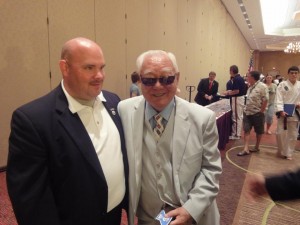
Nam, Tae-hi with author 2007
Nam Tae Hi 남태희 南太熙