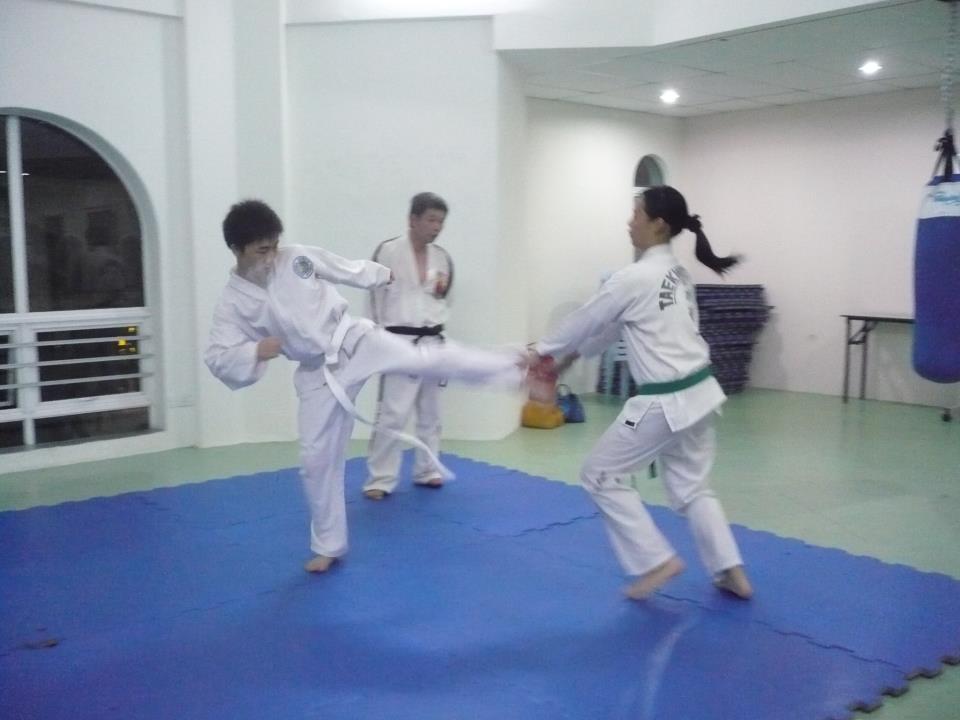
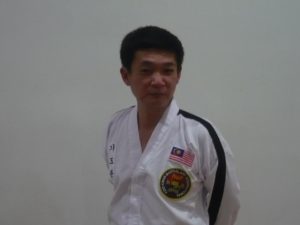
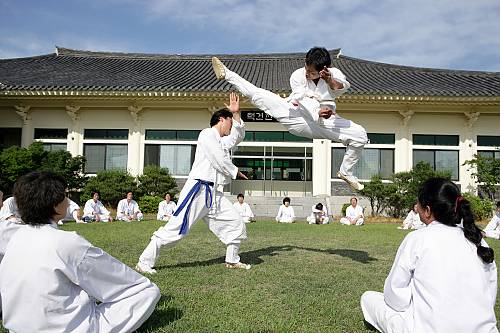
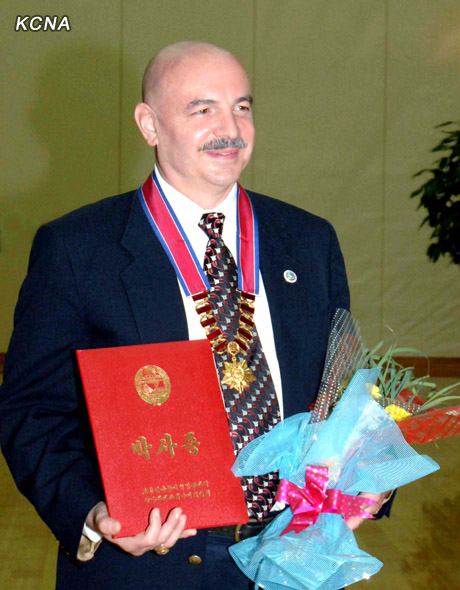
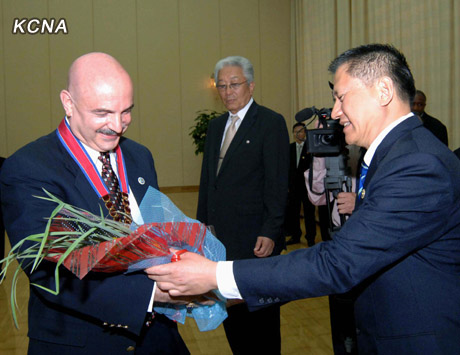
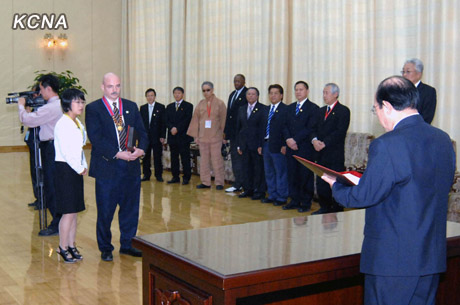
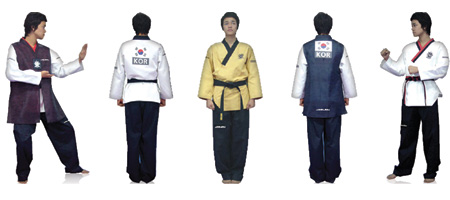
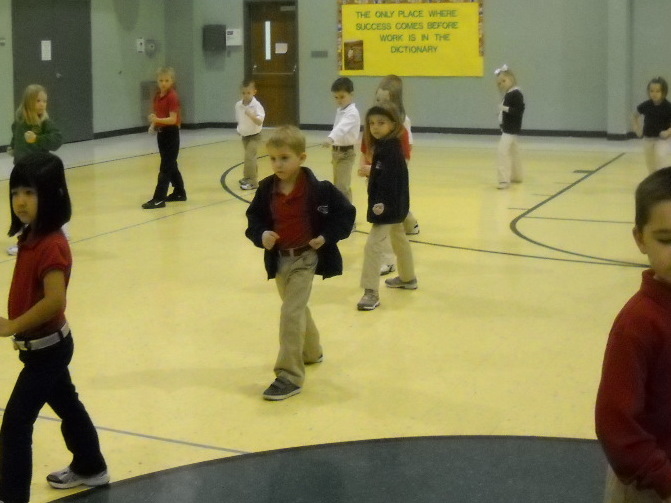
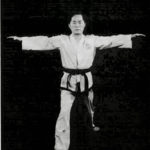
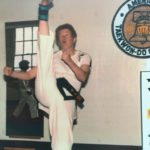
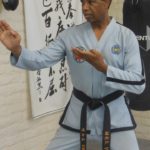
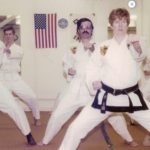
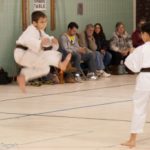
Master Lee Kyu-hyung, a taekwondo professor of Keimyung University, performs a poomsae demonstration for the WTF’s promotional film at the Midong Elementary School in Seoul, Korea, on July 12, 2008.
Master Lee Kyu Hyung (Kyemyeng University – 9th Dan) is the new President of Kukkiwon after being provisionally named yesterday by the Director of the organization’s board, Mr Hong. Master Lee Kyu Hyung will immediately start working for Kukkiwon, as he’s decided to make today his first day as the Chair-in-Office.
Mr Hong did also name some more positions within the organization yesterday: Oh Hyuen Deuk will be the Administrative Deputy Director, while No Sun Myeng was supposed to be the Director of Education, a position which he finally refused to take. Master Lee and Mr Oh have already started to actively work for the development of Kukkiwon.
Master Lee replaces Mr Kim Chung Gun, who was acting as the Chair-in-Office during Hong’s trip to USA. We will now await the official appointment of Master Lee, which is expected to happen in the coming days if there’s no public reaction against the appointment eventually.
Mr Hong did also name 11 new members of the Kukkiwon board last Friday August 16th.
– Lim Yun Taek (Seoul Taekwondo Association President)
– Kim Chul Ho (KTA Vice-President)
– Kim Tae Il (Taekwondo Professional Association President)
– Hwang In Sik (Kyengkido Association Vice-Presiedent)
– Kim Sang Chen (Kyeng Min University Professor)
– Kim Hyen Sueng (Former Congressman)
– Kim Chel Ki (Former Secretary General of the Pro Park Movement)
– Oh Hyen Deuk (Former Kukkiwon Vice-President)
– Kim Myeng Yeun (Congressman)
– Ham Jin Kyu (Congressman)
However, this list of new members of the Kukkiwon board has caused controversy, as the appointments were made on the same day that the former board was dissolved.
This is another article in a series that is focusing on the DPRK “influence” in the Taekwon-Do world. Good or bad, the DPRK has had it’s hand in things and in this case Taekwon-Do. I want reader to know that these articles are not a reflection of the average people of North Korea, they are Korean’s and as Korean’s we share a common bond of friendship and mutual respect. We are mainly discussing the government and its agents and not those of the Korean peoples!
Chong Chon Gang 청천강호/淸川江號 (AP photo)
Soviet Made MIG 21
It is known quite publicly that the Democratic Peoples Republic of Korean (DPRK) AKA North Korea has had a system of corrupt officials, politicians and that the average citizens has about as much right to live a “free” life as a horse fly does. The DPRK also routinely violates the laws of other nations, and most recently tried unsuccessfully to travel through the Panama Canal Zone which, the Panamanian government stopped and seized the cargo ship Chong Chon Gang 청천강호/淸川江號 where they found two MiG21 Fighter Jets, short and medium range missile and other contraband that is currently banned under UN mandates.
DPRK poster: “Lets show the world our wisdom, fighting power, and wisdom of the Koreans”
The Chong Chon Gang recently docked in Cuba, a very rare friend of the DPRK in the Western Hemisphere, and they make the claim the weapons were being refurbished by the DPRK however, this clearly isn’t the case, as both MiG fighters had fuel in them, and as any Navel personal will tell you, you only send fuel in equipment if you plan on using them! This particular cargo ship has a long history, it has been detained by authorities all over the world, especially since 2003, it has been cited or detained by other nations such as the Ukraine, Iran, Egypt, Malaysia, Portugal, Philippines and more recently of course recently Panama. This ship along with the majority of the DPRK cargo fleet routinely turns off its AIS (global maritime satellite position) which is mandated by international maritime law as well.
So, what does this have to do with Taekwon-Do? Well quite frankly, on the surface of
A combination photograph shows founder of North Korea Kim Il-sung (L), North Korean leader Kim Jong-il (C) and Kim Jong-il’s youngest son Kim Jong-un (R).
it….nothing, but when you look at the culture behind the DPRK, and the fact that they have 73 North Korean black belts (several in the Master status) now actively teaching throughout the world, mainly in the former Soviet Bloc counties, but, also in some “Western bloc” as well, like New Zealand, Japan, etc. They are now promoting an art that to them is 30 years old, and producing black belt instructors that truly don’t understand the art, either technically or spiritually. This is based on first hand knowledge, actions they portray publicly, and privately. And in a few examples there near god like devotion to the DPRK system and of course the Kim Family.
DPRK coin showing “Juche Taekwon-Do”
Juche in Hangul (Korean)
I along with my guest writers and myself, we will go into detail on what it is like to train under a “DPRK” instructor and allow you the readers to compare that to training under other instructors. If the DPRK instructors were truly teaching Taekwon-Do…then this article and any like it would not be of interest, however, their brand of Taekwon-Do is not that of the International Taekwon-Do Federation (ITF), it is their own brand, that they use the ITF to have the ability to travel and teach “ITF Taekwon-Do” however, it is really “Juche Taekwon-Do” 주체태권도/主體跆拳道 and this is evident any time you see Taekwon-Do in North Korean medial, print or even commemorative coins and stamps!
The “Kukkiwon” of DPRK the Taekwon-Do Palace
Over the next series of weeks, we will publish first hand accounts of training, money raising, technical standards and other means used by instructors from the DPRK that you, the reader can judge for yourselves if the DPRK style instructors are teaching Taekwon-Do or are they furthering themselves, and or the DPRK regime.
Jhoon Rhee, left, Choi Hong-hi, center, and Kim Un-yong are three of the key figures who have taught, developed and marketed Korea’s most successful non-industrial export — martial art taekownndo — to the world. / Korea Times
By Andrew Salmon
Students at the University of Texas sport hall looked on as a wiry, barefoot Asian man, dressed in what looked like white pajamas, secured with a strip of black cloth, strode the length of the hall, punching the air and kicking above his head. Then he raised his knee, yelled, and kicked out at one of the gymnasium’s 40-foot-high wooden beams.
The veneer in the wood cracked all the way to the ceiling.
Astonished, the students watched intently as the little man called out members of the university football team to demonstrate on. Each — and he chose only the largest — was disposed of with the kind of fighting technique few Americans in the early 1960s had ever seen.
The man’s name was Jhoon Rhee. A recently retired major from the South Korean army who had emigrated to the United States in 1959, he was one of the first masters to demonstrate a martial art called “the way of foot and fist” — or in Korean, “taekwondo.”
As names, Jhoon Rhee, Choi Hong-hi and Kim Un-yong are not nearly as recognizable as those of the presidents, revolutionaries, chairmen, generals and sportspersons who have populated this column thus far, but they have been greatly influential in the international space, for they are three of the key figures who have taught, developed and marketed Korea’s most successful non-industrial export to the world.
Martial art is born
Oddly, this most Korean activity has Japanese antecedents. By the mid-20th century, Korea’s traditional martial art, taekkyun — a folk sport frequently practiced alongside ssireum, or traditional Korean wrestling — was within one practitioner of extinction.
However, during the 1910-1945 colonial era, a number of Koreans had studied Japanese karate — itself, originally an Okinawan import. The most famous of these men, Choi Bae-dal changed his name to Oyama Masutatsu and remained in Japan, where he founded the famous Kyokushin system of karate.
But others taught in Korea, in their schools, or “kwan.” The arts practiced within were variously named kongsudo, taesudo and tangsoodo. It has been claimed by some that there was influence from traditional Korean styles, but the last living taekkyun master, Song Duk-ki, had no relationship with any of the original kwan. The masters of all had studied karate (though one had also studied kung fu) and the material taught was identical to karate in terms of uniforms, training methods and techniques
After the Korean War, the major kwan expanded to nine and in 1955, they met under the headship of Gen. Choi Hong-hi, who had instituted martial arts practice in military training, and agreed to coalesce under a new name suggested by Choi: “taekwondo.”
Taekwondo had government backing, but its Japanese origins did not sit well with a people who harbored sour memories of harsh colonial rule. So taekwondo was Koreanized: local terminology was adopted, a code of conduct written and the national flag emblazoned across uniforms and training halls. A long history was tacked on to the art, tracing taekwondo to the near-mythical warriors of the Goguryeo and Silla Kingdoms, while making little or no reference to Japanese influence. But taekwondo’s technical development would lead it far from its Japanese roots.
Taekwondo takes off
Korean firms won global success not for creativity, but for effective manufacturing and incremental innovation, i.e., starting as copycat makers, then moving up the value chain by tweaking and improving products here and there — a faster semiconductor, a thinner LED screen, etc. So it would be with taekwondo.
From the late 1960s onward, taekwondo began to change. Either consciously or unconsciously, taekwondo began to mirror taekkyun (which Choi, who had not founded one of the first kwan, had studied prior to learning karate) in its emphasis on kicks. Taekwondo masters developed a wide range of powerful thrusting, spinning and jumping kicks. And Koreans pioneered full-contact fighting competitions — a development rejected by Japanese karate organizations, who believed, erroneously, that their skills were too deadly to use full-force. (The only Japanese school which promoted full contact was led by the Korean, Choi/Oyama.) In light of combat experience, changes were made to both training methods and techniques. Taekwondo began to move from a martial art to a combat sport.
On the “mass manufacturing” front, moves were scientifically broken down into easily teachable segments and the solo forms of taekwondo — set sequences of linked moves — were simplified, enabling a single instructor to lead a class of dozens, even hundreds, of practitioners. This enabled systemization of the grading process, which, in turn, eased organizational management and oversight.
As these developments were underway, Koreans were heavily engaged in the Vietnam War. While Korean troops in the Korean War had often been poorly equipped and poorly led, in Vietnam, the “ROKs” proved tough and brutally effective, winning the respect of their American allies. All were trained in taekwondo, and soon they were teaching the art to their allies. The art’s internationalization had begun and as the Vietnam War came to its conclusion, a martial arts boom was surging across the United States.
ITF or WTF?
While U.S. troops in Japan and Okinawa studied karate, GIs in Vietnam and Korea studied taekwondo. But Tokyo was pushing Japanese judo, not Okinawan karate as a global sport, while Seoul promoted taekwondo through the International Taekwondo Federation (ITF), founded in 1966 under Choi’s headship. Under this program, instructors were dispatched abroad to promote the newly organized and rapidly sportifying art.
Choi himself fell afoul of Korea’s then-violent politics. In 1966, he reportedly visited North Korea, where he would subsequently introduce taekwondo. That was a standout moment in a series of events that remain murky to this day, but which include a long-simmering dispute between Choi and President Park Chung-hee. These events would lead Choi to leave South Korea and re-establishing the ITF under his own leadership on neutral ground — Canada — in 1972. (Even murkier events would follow: Choi’s son, Choi Jung-hwa, would later sensationally state that North Korea had hired taekwondo experts to kill President Chun Doo-hwan in the 1980s.)
To replace the ITF, the WTF, or World Taekwondo Federation, was founded in Seoul. To this day, the two organizations represent the North and South Korean versions of the martial art: the former remains the martial art Choi codified, the latter, a more sportified version. In today’s WTF, Choi’s role in taekwondo’s development and promotion has been heavily airbrushed.
However, it seems that the split between the two organizations may have furthered the internationalization of the art, as the two rival bodies competed to win national converts.
Regardless of their affiliation, many Koreans who instructed abroad, including early pioneers such as Rhee, found an eager international audience awaiting them, offering a far better living abroad than at home. Nowhere was this more true than in the United States.
Coming to America
In the early 1970s, Asian martial arts entered the Western world’s cultural mainstream thanks to the chop-socky thrillers of Bruce Lee and David Carradine’s “Kung Fu” television show. Although both Lee and Carradine espoused Chinese martial arts, kung fu teachers in the West were secretive, split between scores of different (and often esoteric) sub-styles, and lacked an overall organizational body.
The Koreans, on the other hand, were organized, visible, hard-working and more than willing to teach the Western public. In addition to their fearsome post-Vietnam War reputation as the “Prussians of Asia,” avuncular masters like Rhee promoted their art as a useful disciplinary and educational endeavor for children. And Korean taekwondo, with its arsenal of high, spinning and jumping kicks, was perfectly placed to catch the eye of a public for whom “Asian martial arts” tended to mean “high kicking.”
Soon, almost every American town had a taekwondo studio in its mall or main street, and martial artists nation- and soon world-wide either learned taekwondo or borrowed its kicks, which became popular weapons at cross-style martial arts tourneys.
Bruce Lee and Jhoon Rhee became friends and exchanged techniques; Rhee reportedly taught Lee high kicks, while Lee taught Rhee his hand techniques. That relationship paved the way for Rhee’s starring role in a forgettable auctioneer “When Taekwondo Strikes” (1973). Rhee (wisely) decided not to pursue a film career and stuck to teaching, though he did create an iconic TV ad, featuring a cute little girl and the strap line “Nobody Bothers Me!”
In 1973, Bruce Lee died. With martial arts movies storming global box offices, the question was who would fill his shoes. It fell to a Korean stylist to become the next global martial arts superstar: Chuck Norris, an all-American martial arts champion who had learned his kicks while stationed at Osan Airbase. Battling drug dealers, Viet Cong and terrorists, Norris emblazoned Korean kicks across popular culture.
To look again at taekwondo in business terms: the U.S. led global trends and success there enabled success anywhere. Taekwondo went global, disseminated by hard-working expatriate teams of Korean instructors, dispatched by the head office in Seoul, the global brand headquarters. But there was one multinational marketing platform for taekwondo still to capture: the Olympics.
Into Olympic Games
Perhaps the defining moment that South Korea emerged onto the world stage was in 1988 as the host of the Summer Olympics. The standout scene of the opening ceremony was a mass display of taekwondo choreography; the art was also a demonstration sport in 1988. This achievement would largely be laid at the door of Kim Un-yong, the WTF head.
Unlike the ITF’s Choi, Kim was not a taekwondo practitioner himself, but a sports politician. The ITF and WTF promoted separate world championships in 1973 — the ITF in Montreal, the WTF in Seoul — but it was the WTF, with the backing of South Korea that had begun to draw ahead in the competition between the two governing bodies.
Kim, who would leapfrog from WTF head to vice president of the International Olympic Committee (IOC), successfully lobbied to have WTF taekwondo included in the 1984 Asian Games, then the 1988 Summer Olympics, where it was a demonstration sport in Seoul. In 2000, it became a full medal sport in Sydney.
Kim himself did not reap the rewards of WTF success. In 1999, he received a “severe warning” from the IOC for securing jobs for his children. In 2004, he was arrested in Korea on charges of corruption and embezzlement, following the failure of PyeongChangWinter Olympics bid: he was accused of sacrificing PyeongChang to solidify his own position inside the IOC. He was jailed for two years and expelled from the IOC. It was a dramatic plunge for a man who had so successfully led the WTF, under which organization taekwondo became perhaps the world’s most popular martial art.
Tomorrow’s challenges
Taekwondo of the 21st century, like its Asian cousins karate and kung fu, is facing a new challenge in the global arena. Mixed martial arts competition, or MMA, has proven a massive hit with global television audiences, making it the first combat sport since pro boxing to succeed as mass entertainment.
Moreover, the broad technical range and “no-holds-barred” rule-set of MMA arguably makes it more effective as a fighting system than style-specific martial arts such as judo, taekwondo, karate and kung fu, none of which have won significant audiences beyond their own circles of practitioners. How Asian martial arts will be impacted by MMA in the long-term remains unclear.
Although the current WTF president, the respected academic Dr. Choue Chung-won, eagerly promotes the art’s internationalization — he once noted his pleasure at seeing a demonstration mixing taekwondo and tango — South Korean flags continue to be saluted in taekwondo training halls and sewn on taekwondo uniforms worldwide. It is hard to think of another Olympic sport that so closely binds itself to its country of origin.
And at home, its catchment pool may be dwindling. In the 1960s, 70s and early 80s, Korean taekwondo practitioners were hardcore martial artists in an era when few other extra-curricular activities were available. As growing prosperity makes young Koreans less hardy, ever-increasing leisure options create competition for martial arts.
Today, outside the military PT curriculum and pro-athletic training at sports universities, Korean taekwondo is almost exclusively the province of children. And with regular grade tests being taken by thousands, the once-vaunted black belt has lost its mystique.
Moreover, as of this November, Korea’s Cultural Heritage Committee has recommended taekkyun be listed as a UNESCO living cultural heritage. In a truly remarkable renaissance, the ancient martial art survived Song’s death in 1987. His students oversaw the art surging in popularity in the 1990s, mainly on university campuses. Today, even to the layman’s eyes, it is easy to distinguish between it and taekwondo. An official designation recognizing taekkyun, not taekwondo, as Korea’s traditional martial art, drives a further nail into the latter’s dubious history.
So taekwondo stands at a crossroads. Will it secure a full-time Olympic slot or not? Is it a martial art for adults, a combat sport for athletes, or an educational activity for children? Is it traditional or modern? Is it Korean or international?
Arguably, it is now deep and broad enough to be all the above, for the art’s astonishing global popularization mirrors Korea’s astonishing national ascent — the greatest national success story of the 20th century. However — like the peninsula — it remains divided among different governing bodies, with their own forms and competitive systems.
So what of Choi, Kim and Rhee?
Choi died in 2002 in Pyongyang, where he received a state funeral. He stated that he had taught the art regardless of ideology or nationality, but his ITF has splintered, leaving the WTF dominant. Even so, due to his influence on, and naming of the art, he is widely honored as “the father of taekwondo.”
Kim served his jail term, but never recovered his positions; his role in WTF taekwondo’s global success has largely been superseded by his personal disgrace.According to his website, he is today taking advisory roles in Korean sports organizations
Rhee, now in his 80s, never swerved toward movies or politics, but continues teaching taekwondo, including on Capitol Hill. An icon of physical fitness, he is so respected among America’s elite that, in 2000, he was named alongside Alexander Graham Bell and Albert Einstein as one of the nation’s “most notable immigrants.”
Despite its political vicissitudes, the martial art these men taught, developed and marketed is an icon of modern Korea. Like kimchi, taekwondo is one of a handful of Korean words spoken and recognized worldwide.
Suggested for publication by Master Rick Balkin, Vice-Director KIDO KWAN
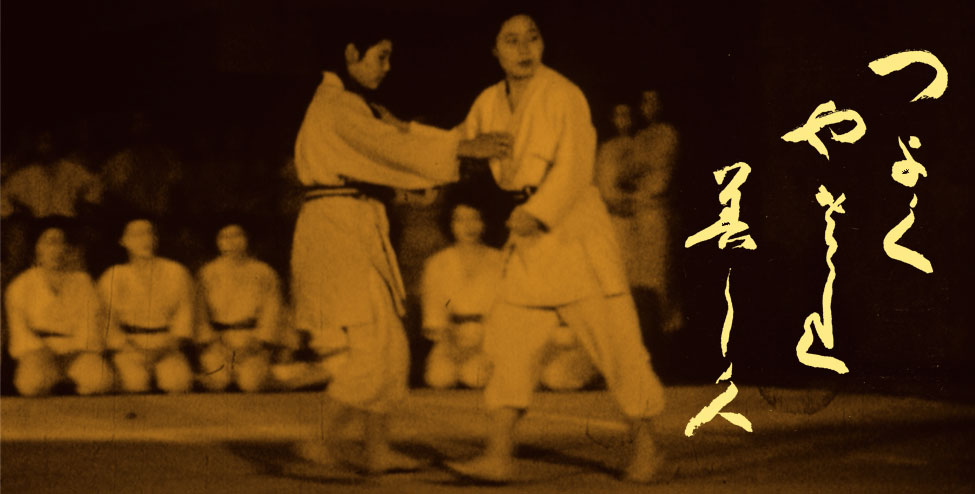
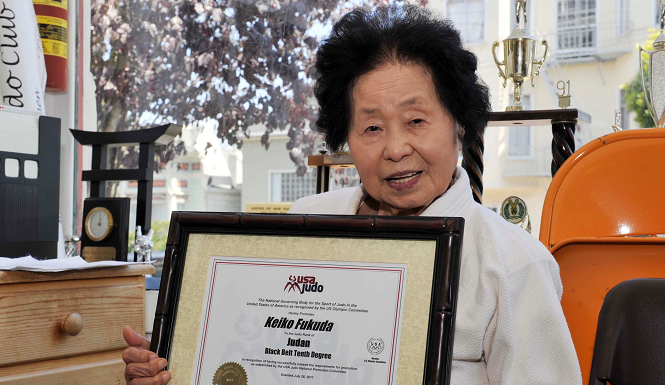
Keiko Fukuda 1962
LOS ANGELES (Reuters) – Keiko Fukuda, the Japanese-born granddaughter of a samurai who learned judo from its founder and became the highest-ranked woman in the martial art, has died at age 99 in San Francisco, her friend and caregiver said on Saturday.
Keiko Fukuda 2011
Fukuda passed away of natural causes at her home on February 9, said Shelley Fernandez, 82, who lived with Fukuda, helped her run the Soko Joshi Judo Club for women in San Francisco and referred to the woman as her adopted older sister.
Standing only 4 foot 10 inches tall, Fukuda ventured into the fire-bombed streets of her native Tokyoduring World War Two to reach the dojo where she taught classes.
Fukoda continued to do judo exercises into her 90s, but used a wheelchair in her final years. At her dojo, she sat in a chair as her assistant teachers worked with students, and would chime in with instructions, Fernandez said.
“Up until the last, she was very lucid and she never forgot any judo techniques – ever,” said Fernandez, who added that Fukuda taught at the school three times a week until she died.
In July 2011, USA Judo conferred on Fukuda the rank of “10th dan,” the highest level of mastery possible in the martial art. She was the only woman in the world and the only person in the United States to ever achieve that status.
Only three others hold that title, and they are all men who received the promotion from the Kodokan Institute in Tokyo, which is considered the headquarters for the sport.
The Kodokan promoted Fukuda to “9th dan” in 2006, five years after she received that rank from the U.S.-based branch of judo. The same year the Kodokan promoted her, it vaulted the three current male holders of “10th dan” to that level.
‘CHOSE JUDO OVER MARRIAGE’
Fukuda was born in Tokyo on April 12, 1913, into an upper-class family. Her grandfather was a samurai master of jujitsu who taught the martial art to Jigoro Kano, who went on to create judo. When Fukuda was 21, Kano invited her to join a women’s division at the Kodokan.
As a woman, Fukuda had been expected to marry and devote herself to such home-based arts as the Japanese tea ceremony, but instead she gave herself over to judo. The decision was chronicled in a documentary film about her life called “Mrs. Judo” that has been on the festival circuit in recent months.
“That was my marriage,” a tearful Fukuda said in Japanese in the film. “I chose judo over marriage. I never imagined I would live so long with this.”
Female judo teachers in Japan were not allowed to marry, and Fukuda did not want to give up the sport, Fernandez said.
In another restriction placed on Fukuda because of her gender, she was barred from competing on the mat against an opponent, Fernandez said. But she demonstrated judo techniques with a partner at the 1964 Olympics in Tokyo, the year judo was introduced as an Olympic sport.
Fukuda came to the United States in 1966 and became a U.S. citizen six years later, founding her San Francisco-based school around 1970. Her motto for herself and those she taught was, “Be strong, be gentle, be beautiful.”
“Judo, it’s not just a sport, it’s a mental, physical and spiritual centering of your life, and it’s an art and a science as well, and her life was totally in balance,” Fernandez said.
(Reporting by Alex Dobuzinskis; Editing by Dan Whitcomb and Todd Eastham)
There are 20 questions in the first 2013 survey. All information you provide is kept private, and no information of a personal nature will be used without your express written consent. You will have the chance to leave personal information at the end, if you so choose. Also, we are updating our web links and contact directory. If you would like to be added to our links pages, please provide that information at the end and we will add you, your school and or associations.
Master Benny Teh held his first rank testing (Kup/Dan Classing MAS-001) under the auspices of the Kido Kwan™ recently and we would like to congratulate not only Master Teh, but all of his students who tested and passed with great results!
There are hundreds, maybe even thousand of books written about Taekwon-Do (in its various spellings). Many more written on other foams of martial arts. When I took over as webmaster from Nowling-Sahyun, he had more than a dozen book reviews already published on on the older Kido Kwan site. I’ll bring those back and more! Many have asked where they reviews had gone, and with so many books to review, it’s time to bring them back!
We have always grown over the years, we have had an international branch of members for some time. Earlier this summer we were in negotiations with members in Malaysia Singapore, and Indonesia. We are happy to say that we now have several chapters in Malaysia and welcome Master Ooi Kiat “Benny” Teh, VII Dan to the Kido Kwan™ and his members and associates.
A new article called about two of Taekwon-Do/Korean history generals…below is a sample of the new article by Master Doug Nowling
Much has been written about many of the movers and shakers of Taekwon-Do histories. This article will discuss two Korean figures that played a huge role in the international aspects of Taekwon-Do and the development of Korea in the 20th Century.
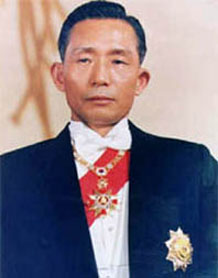
Many know of General Choi, Hong-hi the founder of Taekwon-Do and the International Taekwon-Do Federation®. Some history buffs and Koreans also, know of General and – later President Park, Chung-Hee, the 3rd President of the Republic of South Korea.
Park Chung-hee 박정희 (朴正熙)
So what do these to Koreans have in common? Simply put they are ardent Korean Patriots. Both were South Korean Army Generals, both were born during the Japanese occupation of Korea and both used Taekwon-Do as a tool to spread Korean principles, ideas, customs and power.
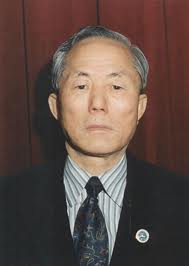
Choi Hong-hi 최홍희 (崔泓熙)
Many will also note in General Choi’s autobiography “Taekwon-Do and I” that he disliked General Park, and that General Park held animosity toward General Choi. The issue or question is why? The answer is…that they were both cut from the “same cloth.”
General Choi was born in the far north of a “unified” but Japanese controlled Korea (yang), while General Park was born in the far south of a unified but Japanese controlled Korea (yin).
Choi was born in November of 1918 in the Chinese zodiac year of the Horse (yang), while Park was born September of 1917 in the Chinese Zodiac year of the Snake (yin). According to their zodiac signs a lot can be said about both men. Choi was known to be very stubborn like the horse, and Park very sly like the snake.
The Yin and Yang comparison is very appropriate. A lot of people believe that Ying and Yang mean positive and negative, a very simplistic view of the philosophy. It really is more like “shadow and light.” You can’t have a shadow without the light. You need both light and shadow to define the affect and identify of each. Much like the expression, “You can’t have a rainbow without first having the rain.”
We will Build the Guidelines for The Martial Arts Community that Will Keep Young Students Safe.
Welcome to “This Project,” which we are working to name and define, here, in almost-real-time. This project is about laying down a set of rules, policies, and best practices for the martial arts industry –as in for teachers, school owners, and students –regarding the prevention of sexual misconduct between those who teach the martial arts and those who come to learn. We will also, I’m sure, set down some policies about the reporting and/or disclosure of sexual misconduct, after the fact.
The first thing to do is sign your name on our volunteer’s list, that is if you want to participate (and we really do want –and need — your assistance).
We are currently in the first few days of the project, so we’re not exactly sure of how far we will go or how many resources we will accumulate, as we have a number of very competent professionals, in counseling and law enforcement, who will be assisting us.
I can tell you, however, we will be moving VERY fast.
Our goals, so far:
We will build a site where volunteers may work together to produce a manifesto — a document stating policies and practices we will ask the entire international martial arts community to embrace and enforce.
We will produce a training video that all school owners and instructors can use to help bring their teams up to speed on what is permissible –and what is unacceptable — with regard to children and our own behavior, policies, and safety practices.
We will compile a list of resources and post them publically, so that anyone looking for more information will know exactly where to go.
We will call on volunteers — one hundred people at least — to begin a social-media campaign of education for the general public about the policies we’ve set down. Our goal will be to ask for martial arts schools and teachers to voluntarily self-regulate by adopting and embracing our efforts –and at the same time, to inform the general public to introduce and require their local instructors to meet these (yet to be written) specifications.
Sign on, we’ll be sending out more information shortly.
If you haven’t heard the news, the man who was thought of by many as the preeminent martial arts school / industry business teacher in the world, hung himself last week, just a day before his arraignment on misdemeanor charges for unsolicited sexual advances (molestation) on a young man he accosted during a “massage” at his martial arts school.
The charge was only a misdemeanor, not high treason, but the general consensus is that it was only the tip of the iceberg of information regarding what was likely 20 or 30 years of molestation, much of it aimed at underage boys in this martial arts teachers care.
It is a tragedy of epic proportions for the man’s family, his friends, his students, the martial arts “industry,” and, of course, for all the children this man accosted under the cover of his role as “Kyoshi” (a title, mostly used by Americans, to indicate they are high ranking “masters” or “professors” of the martial arts).
There’s no two ways about it, it’s bad news. Instead of the man being recognized for 35 years of service to others, he’s going to be remembered by the general public as just another pedophile.
There’s a parallel story, not a good one, that has to accompany this man’s tragic downfall —and that’s the story of how people who knew of the molestation of children in the man’s care stood silent, for months —and, apparently, in many cases for years, essentially allowing the perpetrator to be among other children, constantly, without the parental warning label of “registered sex offender.”
Here are the rules:
When you become aware of a man or woman molesting or otherwise abusing a child, whether it happened an hour before or 20 years ago —and this man or woman lives or works in the proximity of underage children, you are obligated to act as an advocate on behalf of the children, all children, everywhere. You must report the infraction, the crime and all your knowledge of it, to the proper authorities.
You don’t hide what you know to protect your ego; you don’t hide the knowledge to protect his or her family; you don’t hide the knowledge to protect your business or the potential loss in profits you or others might suffer as a result of this person’s crime; your job number one, is to protect the boys and girls who have either been a victim of this person’s crimes —or who might become a victim if the knowledge you have isn’t reported and acted upon immediately.
This is every citizen’s responsibility —and I’d like to suggest that when the man or women or organization in question uses or involves the word “teacher,” the obligation to report molestation and/or abuse is multiplied by 10.
Teachers who are supposed to educate and mentor children are not, under any circumstances here in the 21st Century, allowed to rape, fondle, or otherwise molest a child of any age, period. Unreported crimes perpetuate other crimes.
So, victims of this man didn’t come forward, we can guess, due to the shame involved in being molested by someone they looked up to or otherwise trusted. It’s horrible to be preyed upon by an obvious sociopath, but it’s equally horrible to let the offender go on to inflict the same crimes on other children.
You HAVE TO report molestation as soon as it happens, as these people, these teachers, can’t be left to hunt for other children to abuse —without parents being able to intervene.
If you own or work for a company that has the potential to lose money or clients due to a sex offender’s behavior, you are obligated to put the welfare of young people and the protection of victims or potential victims above the protection of your assets, profits, and reputation. You do this because it’s the right thing to do, because that child, as if it were your child, is more important than your billing clients, your gross revenue, or your image.
We have to self-govern the martial arts industry by having a ZERO TOLERANCE policy with regard to children, teachers, and sexual impropriety of any kind involving either. If you have first hand knowledge of an adult molesting a child —or can get it —you report it, immediately.
If you witness an inappropriate or criminal act between a child and an adult, you report it, immediately.
The martial arts industry, like the Catholic Church, like Penn State, has been disgraced by this child molester and any number of others. We seem to be stricken with a lack of accountability and common-sense self-regulation. It looks like people and companies that were told, that had first or second-hand knowledge of children being molested, didn’t know what to do. So instead of calling for justice and accountability, when the man hung himself so that he wouldn’t have to endure arraignment, arrest, and the long hard stare of parents, students, and friends he betrayed, people and organizations just turned a blind eye.
One company in particular, who I personally told about the abuse I’d heard about first hand from a victim 4 months ago, chose to ignore the crime and actually released abundant praise for the sex offender upon his suicide. Their glowing tribute received, in just a few days, more than 1000 negative comments and one video hosting company demanded it be removed or they would delete the posters entire account. Just a PR tip: Next time a teacher/sex offender is exposed for any sexual crime against children, don’t sing his praises. People expect you/us to be horrified by the crime. When a teacher breaks that sacred trust with parents, all praise goes out the fricking window.
Note: This is NOT OK. Next time something like this happens —and it will happen again —you get brave, you do the right thing, you think of others before you think of yourself, you put your company and your damn business aside, and REPORT IT. Your first loyalty in a business, in a world, where integrity is so essential, is to the children we are expected to “teach” and protect. Our accountability to parents and children is more important than self-protection.
About Tom Callos: Martial arts school business, management, marketing, staff training, money management, and curriculum design: Tom Callos is a veteran martial arts teacher, martial arts activist, and business / curriculum consultant to the martial arts community.
Tom teaches school owners and instructors to think on their feet, stay independent, avoid degrading tactics for school promotion, and to design and re-design their curriculum and careers until, well…they’re masters of their profession.
Tom can be reached on SKYPE at tomcallos and/or on G-Mail video chat.
It has been ten (10) years ago today (15 June) that we lost General Choi, Hong-hi (최홍희/崔泓熙) to stomach cancer and complications and he died in a Pyongyang, North Korean (DPRK) Hospital the Kim Man Yu Patriot Hospital (김만유애국병원) surrounded by his wife, a couple of students and officials of the North Korean Taekwon-Do Committee.
So much has happened in these ten (10) years, that it could feel volumes! So many people have claimed that he wanted this or that, or that he promoted this guy or gal over the other guy/gal etc. However, a good majority of it is just pure fiction! Yes, fiction! So many of today’s Taekwon-Do students speak of him as if they had direct knowledge of what General Choi wanted. I have seen and even had conversations about General Choi from “kids” (those who started Taekwon-Do just prior (was low rank) or shortly after his death) that its kinda sad to hear what they say. That only they or their instructors are the ones following General Choi’s last wishes!
Just prior to his death, the International Taekwon-Do Federation®/I.T.F. already was in trouble, and had been for some time. Especially after the events of 9/11 as many countries like the U.S.A., U.K., Canada, France, Germany etc. had followed the lead of then President George Bush when he declared that North Korea (DPRK) was part of the Axis of Evil and so sanctions became more stringent. North Korea needed to maintain a hold on the organizations such as the I.T.F. to “repay loans” and other avenues of revenues that many masters and instructors, even prior to 9/11 started to voice their concerns.
Many of us know well that General Choi’s son, Grand master Choi, Jung-hwa was set to replace his father at the I.T.F. Congress held in Rimini, Italy. Then, Master Choi, Jung-hwa had already made known (some say purposely, others say it was over heard by those that didn’t “like” him) that he would not allow any North Korean’s to maintain a hold of the I.T.F. and other issues, that were not such a “hot bed” topics at the time.
So, prior to General Choi, passing, there was a “Special Congress” that has now become part of the “folklore” of the I.T.F. history it had reversed it’s decision held in 2001 in Rimini, Italy and declared the previous Congress was void, and so, within hours, the General’s son, set up “shop” at his home in Canada and then in an office building, and so, started the first split of the I.T.F. officially, although, the writing was well on the wall at least as early as 1998 if not before.
Many of us, including the Kido Kwan™ where caught in this mess, we became the first USA group to lend support to the I.T.F. under Choi, Jung-hwa with INO#27 (Independent National Organization). We also, supported the I.T.F. under General Choi and then Chang Ung as we felt it was in best interest to keep both channels of communication open, and we did, for six years, along with many others throughout the world. However, like many other INO leaders, we began to realize that the then Master Choi, wasn’t going to do much if anything different, if anything, situations became worse in some aspects.
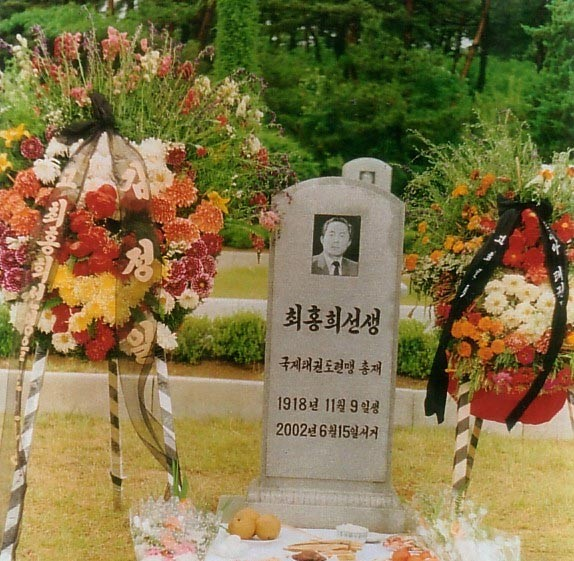
Tombstone reads “Choi, Hong-hi TEACHER International Taekwon-Do Federation FOUNDER”
The I.T.F. again, divided from 1/2 to 1/3 just prior to General Choi’s funeral service held in Pyongyang and supported by a majority of the NGB’s (National Governing Bodies) of the I.T.F. of General Choi. Just after, with the I.T.F. HQ in Vienna still being in the “hands” of Master Thomas McCallum started to issue statements from the I.T.F. declaring many things, everything from expelling members, masters, grand masters to declaring that General Choi’s last wish and will regarding the I.T.F. was made under duress etc.
All of this now, while important part of the history of the I.T.F. and Taekwon-Do in general, matters little ten years later! Many of his “most loyal” and dedicated students, have nearly all left the I.T.F.! Grand master Charles “Chuck” Sereff A-9-1; Grand master Rhee, Ki-ha GB-9-1; Grand master Hwang, Kwang-sung K-9-1 have all severed ties with the I.T.F. over the last decade in one form or the other!
What we need to do is remember the passing of General Choi by learning and teaching his Taekwon-Do to our students, to learn from EVERYONE as General Choi did in fact teach differently to different groups over the years; Taekwon-Do is not the I.T.F., the I.T.F. is not Taekwon-Do! To follow as close as we can his writings and those of his students. Taekwon-Do is not, and should not be a stagnant art! It never was, anyone having the 1959 Korean Text on Taekwon-Do to the most current text prior to his death will being to contest to these facts. We should not however, make the claim(s) that it is what the General wanted, he is gone, and has been now for a decade! A whole new generation is being taught his art, and we should not delude them with the nonsense of who is better, who was right, who is wrong etc! We should follow two basic ideas that he always wanted, and that we know for sure! 1) Taekwon-Do is for EVERYONE! 2) Taekwon-Do should have UNITY!
Here is what Grand Master Rhee, Ki-ha (First Grandmaster Rhee/FGR) has said….
“PERSONAL MESSAGE FROM FGMR: 15th June 2012 is the 10th anniversary of the passing of our Founder & Taekwon-Do Father, General Choi Hong Hi. I wish that he was still physically here guiding & helping us, I cherish the fond memories that I have of the time I was fortunate to have spent with him. On this day millions of us will be remembering & appreciating him, as without our Taekwon-Do Father, none of us would be what we are today, & we would not share our common bond, which is Taekwon-do.
General Choi’s philosophy was that Taekwon-do is for everyone & his dream was unification. His lifetime accomplishments speak for themselves, Taekwon-do is practiced in nearly every country in the world, but sadly he passed away before his dream of unity could be realised. We love our Founder & we love our Art, this itself should bring us together. It is time to stop squabbling over who is right or who is wrong, or who legally owns what, & concentrate on building bridges to achieve the unity that our Founder was working towards, & keep the Taekwon-do spirit alive.
Actions speak louder than words; it is time to stop talking & start doing to produce results. Our main priority must be working together in a courteous & peaceful manner regardless of organisational background to achieve the unity that our Founder wished. We must realise that it is our way of thinking & our actions now that will shape the future of General Choi’s legacy. FGMR“
Let me leave you with one last word….below is the Death Poem of the Korean Patriot Seong Sam-mun (성삼문·1418–1456)
What shall I become when this body is dead and gone?
A tall, thick pine tree on the highest peak of Bongraesan,
Evergreen alone when white snow covers the whole world.
The Kido Kwan has teamed up with Cafe Press to bring to you items that you can purchase one piece or several at a time, without the schools or clubs to have to purchase large quantities of items. You can see our Cafe Press store here The photos below are what are currently available in the store, we will add more soon!
Korea’s traditional martial arts have been listed as intangible heritages.
UNESCO’s Intergovernmental Committee inscribed the three Korean traditions in the Representative List of the Intangible Cultural Heritage of Humanity at a session held in Bali, Indonesia, Monday.
The three items were among six cultural traditions promoted by the Korean government for registration. The martial art, or “taekkyeon” in Korean, and the tightrope walking, or “jultagi,” were expected to be listed as they were recommended for registration at the stage of primary screening. The weaving of fine ramie from Hansan region, or “Hansan mosi,” was reserved at the beginning but included in the last minute.
Taekkyeon
Taekkyeon, the world’s first martial art to become the UNESCO-authorized intangible heritage, utilizes techniques with fluid, rhythmic dance-like movements to strike or trip up an opponent.
There are about 50 certified practitioners currently, and the Korean Taekkyeon Association plays a role in transmission of the martial art.
The committee decided that taekkyeon was qualified for registration because it is “a traditional martial art that has been passed from generation to generation and promotes cooperation and solidarity among its practitioners.” At the same time, the “inscription of taekkyeon on the Representative List could improve the visibility of similar martial arts around the world as an intangible cultural heritage,” it said.
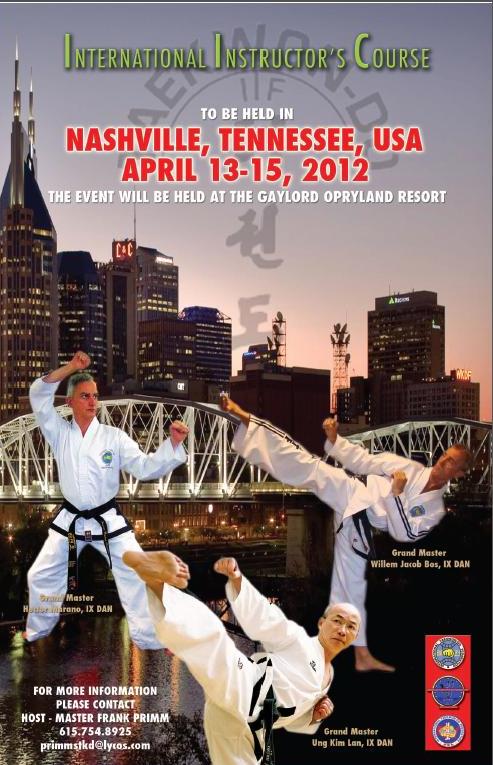
Master Primm and the ATFI are honored to welcome all International Taekwon-Do members to an International Instructor’s Course (IIC) and Black Belt grading to be held in centrally located Nashville, Tennessee, USA on April 13-15, 2012. The event will be held at the Gaylord Opryland Resort.
Grand Master Ung Kim Lan (first time participating in a US IIC)
The IIC individual applications, banquet, and t-shirt forms may be submitted either by email or regular mail. Payment for the seminar, banquet and t-shirts must be received by March 15th, 2012. Hotel reservations MUST be made by March 21st, 2012.
Checks should be made payable to:
Master Frank Primm
930 Needmore Road
Old Hickory, TN 37138
The IIC course is open to Red Belts and above and will cover Chon-Ji to Tong-il. The Technical Committee will help us to expand our knowledge and standardize technique. Subjects to be covered include patterns, self-defense, sparring, theory of power, and the “Do”.
We would love for everyone to take part in this great event. We ask that you make your reservations in advance (by March 15, 2012) so that we can accommodate everyone attending or wishing to attend. Please feel free to contact Master Primm @ (615) 481-6401 or email him at [email protected] with any questions.
We also encourage everyone to take advantage of the significantly discounted room rates at the amazing Opryland resort, which have been extended to allow coverage three days before and/or after the IIC, to provide vacation time and an opportunity to enjoy the exciting Music City, USA!
Yours in Taekwon-Do,
Master Frank Primm A-7-45
SEMINAR INFORMATION
We have selected the Gaylord Opryland Resort for the International Instructor’s Seminar in Music City (Nashville, Tennessee, USA).
Also, on Saturday evening we will have a special banquet for everyone to enjoy the company of the Grand Masters, Masters, and all of the TKD students. The banquet will be held at a nearby restaurant—great southern food in a fun environment! Transportation available if needed.
Seminar Fee: $200.00
Masters Fee: $50.00
Program:
Thursday, April 12th
For those early birds who decide to arrive in advance and enjoy the best of Nashville, we will gather in downtown Nashville at 7pm at The Beer Sellar on 107 Church St., amongst the honkey tonks and right in the entertainment district. If you need transportation please let us know (615-481-6461—Lisa Primm). This is an informal gathering—but sure to be a kickin’ good time!
Friday, April 13th
3:00pm-7:00pm: Training in the Washington Room B (check in will begin at 1:30 pm)
Saturday, April 14th
9:00am-12:00pm and 1:30pm-3:30pm: Training in the Governor’s Ball Rooms A and E.
Lunch is on your own.
3:45pm: Black Belt testing will be in the same area from approximately 3:45 pm until the conclusion
7:30pm: Banquet to be held at “Cock of the Walk” Restaurant (transportation available)
Sunday, April 15th
9:00am-12:00pm: Training in the Governor’s Ball Rooms A and E
TEST FOR DEGREE PROMOTIONS
Participants wishing to test for promotion must:
· Send the application form through the National/Allied Association at least one
(1) month before the promotion date to the ITF Administration HQ.
· Bring 5 wooden boards measured 30x30x2 cm. (We will have boards for purchase, if needed)
· Pay their ITF degree certificate and grading fee one hour prior to the grading.
· Test for degree promotion will be on the second day of the course after the
second training session.
· The result of the test will be announced after the last IIC training session.
· No spectators are allowed during the degree promotion.
· His/her Instructor may accompany the candidate.
· For testing applications visit the ITF website at:
Please make sure to book your room in advance due to limited availability. We would like to make sure everyone is located in the same hotel. We have negotiated a significantly discounted room rate so that everyone can enjoy this breathtaking resort. For reservations please contact the hotel directly, and use the Block ID below.
Hotel Address:2800 Opryland Drive, Nashville, TN 37214
Reservation Phone: 1-866-972-OPRY (6779)
Block ID: X-IIS12 (BE SURE TO USE THIS CODE WHEN RESERVING YOUR ROOM)
Reservation Deadline: March 21, 2012
BANQUET
To ensure that you are able to enjoy an evening with the Grand Masters and Masters, we ask that you send in your banquet request by March 15, 2012.
· Place: Cock of the Walk Restaurant (featuring a southern meal with something for everyone!)
· Date: Saturday, April 14, 2012
· Time: 7:30 pm.
· Price: $25 per person (cash bar available)
· Participation: Mandatory
HOTEL INFORMATION
Hotel Room rates:
$149.00 per night 1-2 people
These rates apply for 3 days before and/or 3 days after the seminar
Parking (at a reduced rate) is $10 per night if need
OTHER THINGS TO DO IN NASHVILLE
Are you joining your spouse for this trip and wondering what to do with your free time? Are you interested in extending your trip to create a vacation in Nashville? Are you bringing along children or teens? A few of Nashville’s great activities are listed below. Feel free to call Lisa Primm at 615-481-6461 if you have “tourist” questions!
Honkytonks and Downtown Night Life on Historic 2nd Avenue
Opry Mills Shopping Mall (grand re-opening March 29, 2012—Tenessees largest outlet, value retail, and entertainment destination—just steps from Opryland Resort)
Country Music Hall of Fame and Museum
Music Row Area
Cheekwood Botanical Gardens and Museum of Art
General Jackson Showboat
Grand Ole Opry
Adventure Science Center
Bell Meade Plantation
The historic Ryman Auditorium
Frist Center for Visual Arts
Nashville Zoo
Gourmet and wide variety of ethnic dining
Incredible shopping including the upscale Mall at Green Hills
The Parthenon
Abundant State and City Parks
Nashville Predators Hockey (Stanley cup playoffs begin in April)
DINNER BANQUET-“Cock of the Walk” Restaurant
INTERNATIONAL INSTRUCTORS COURSE
April 14, 2012
(One form per person please) $25 (dinner) + $18 (per t-shirt) = ______
North Korea hosted the ITF Taekwon-Do World Championships this month for the first time in 19 years, opening its doors to 800 athletes from more than 80 countries, including the United States.
Hosting an international event draws unwanted attention from the outside, but it also brings in much needed foreign currency. Mobile phones offered one cash injection. Foreign visitors could rent a phone for $3.50 a day, but to call outside the country, it cost $6 per minute.
During the games, officials from the reclusive nation took the opportunity to tell the western news media they want closer ties.
“More engagement is better for improving relations with North Korea and the United States,” said Chang Ung, a North Korean delegate to the International Olympic Committee. “Active engagement, coupled with visits from both sides, are good because they should help understand each other better.”
Improving relations means improving North Korea’s image. Despite the mounting pressure of a chronic food shortage, the government says it has launched a massive campaign to make North Korea prosperous in 2012.
Next year marks a century since the birth of North Korean founder Kim Il Sung, and the government is trying to put a shine on its image with infrastructure projects.
Military parades are usually held every five years, in years ending in zero or five. But this year, outside the hotel housing the foreign press covering the Taekwon-Do championships, North Korea conducted a large military parade.
Experts believe the show of force was aimed at demonstrating North Korea’s military power ahead of next year’s centennial celebrations.
Taekwondo officials of the two Koreas have met in Beijing about a dozen times in recent years to discuss a possible merger of their international bodies but no progress was made, a U.S. radio station said Wednesday, quoting a North Korean taekowndo leader.
In an interview with Voice of America, Chang Ung, North Korea’s International Olympic Committee member who also heads the country’s international taekwondo organization, said no breakthrough was made in 11 rounds of inter-Korean negotiations held in Beijing since 2004.
Chang, who heads the North Korean-led International Taekwondo Federation, told the Washington-based radio station that the secret negotiations in Beijing began after Choue Chung-won, a former Seoul university president, became the new head of the IOC-sanctioned World Taekwondo Federation.
“Since Choue Chung-won became the WTF president, the two bodies met 11 times in Beijing, but there was no progress,” Chang told VOA.
“I think the merger can only happen after the unification.”
Chang did not say what blocked progress in the merger talks in Beijing but previous reports said that the North insisted on equal representation of the two bodies in a unified organization, a proposal rejected by the South.
Chang didn’t specify which officials were involved in the Beijing negotiations but said he himself visited South Korea in August 2002 and discussed the issue with the then WTF president Kim Un-yong.
Recognized by the International Olympic Committee, the Seoul-based WTF is the official international governing body of taekwondo, a traditional Korean martial art.
If you walk into Sereff Tae Kwon Do in Broomfield on an average weekday afternoon, you may catch Renee Sereff in a quiet moment of conducting business, with reading glasses perched on her nose, a phone lodged between her ear and shoulder and paperwork generated from the day mounting like Stonehenge on the glass display counter.
As students, parents, and instructors begin to trickle in for afternoon classes, Sereff detangles herself from phones and paperwork to greet each person with the warmth of a mother and the friendliness of a neighbor, all while juggling the multitude of questions, requests, payments, forms and more that come at her rapid-fire from the incoming masses.
Students arriving at the door — single-digit in age to septuagenarians — however, unfailingly stop in their tracks, turn to face Sereff, and bow with respect.
As the first woman in the United States Tae Kwon Do Federation to achieve the rank of Grand Master– that’s Ninth Degree Black Belt, or Ninth Dan as it’s called — this 64-year-old Broomfield native is humble in her demeanor, yet steadfast in her Tae Kwon Do journey that spans more than 40 years.
“Tae Kwon Do has given me a lifetime of opportunity,” said Sereff of the martial art, but adds that the opportunity is really about “teaching and giving back.”
And giving back she has. Grand Master Renee’ Sereff is considered by many to be the “Mother of Tae Kwon Do ” with regard to paving the way for women and girls in this martial art.
A brief look back
Tae Kwon Do is a relatively new martial art, having been developed in the 1940s by Korea’s military General Choi Hong Hi and first recognized as a martial art in 1955. Based on a combination of Japanese Karate and Teak Kyon (“foot techniques”), Tae Kwon Do was developed by Choi as a means of self-defense in military settings that he perfected and codified into a distinct martial art.
Though the U.S. military was introduced to Choi’s Tae Kwon Do in the 1950s and ’60s, the United States Tae Kwon Do Federation was founded as recently as 1973 with the goal of following the traditional form of Tae Kwon Do set forth by Choi. This evolved to include a combination of foot and hand skills, patterns, sparring, HoSinSul (choreographed self-defense) and breaking.
Key to Choi’s form of Tae Kwon Do is not just the visible skills of patterns or breaking, or the ranks from White Belt to Ninth Dan. Choi’s teachings, more importantly, include an introspective focus on the tenets of Tae Kwon Do: Courtesy, Integrity, Perseverance, Self Control, and Indomitable Spirit. Together, the outward skills and the inward focus create athletes that are highly skilled in self-defense and armed with an inner confidence that brings peace, not battle.
The journey begins
Because Choi developed Tae Kwon Do for military self-defense, its early students were almost exclusively male.
“When I started (in the early ’70s), there were not many women in class,” Sereff recalls, having started Tae Kwon Do a few months after she’d enrolled her own children in the martial art.
Sereff, who would later meet and study directly under Choi on numerous occasions, surmised that Choi really had no intention of having women participate, “perhaps because of his culture or because women were really just not invited.”
Of her own beginnings in Tae Kwon Do , Sereff mused, “It was good exercise, and I really did not want to just stand there (watching her kids train) for an hour and a half.”
Sharon Cormier, a Fifth Dan from Washington, also recalls how Tae Kwon Do was much different back then.
“In the old days, (women) were not listened to, nor were we taken seriously.”
Testing requirements to advance to the next rank were not as stringent for women as they were for men. Very few sparring opportunities existed for women.
Men in Tae Kwon Do “did not think we could perform on the same level as them,” Cormier said.
Interestingly, Cormier remembers learning about Choi when studying Korean history in high school in the early ’70s. When she became interested in Tae Kwon Do just a few years later, she sought out the school that followed Choi’s teachings.
“I wanted to be part of an organization that honored the general — the father of Tae Kwon Do.”
By the mid-1970s, many USTF schools had sprung up around the United States, and women, though still small in numbers, were indeed becoming part of the community. When Choi was introduced to some fantastic practitioners that were women and juniors (students younger than 16), Choi wanted everyone to learn Tae Kwon Do,” Sereff said.
Though Sereff asserts that Charles Sereff and Choi were the pioneers who helped women and juniors be accepted in the martial art of Tae Kwon Do, she was a leading example of what women were capable of and of ways women could contribute to and excel in the martial art.
Just as Choi traveled to train others in Tae Kwon Do around the world, so did Sereff. As an international referee, Sereff has represented the United States at world championships in countries such as Russia, Greece, Malaysia, Canada, Argentina, Italy, New Zealand, Ireland and Scotland. Sereff also taught at world camps in Australia and New Zealand, which she said, “helped me establish the fact that women really do have a place in Tae Kwon Do.”
At the time, several of these countries did not have an official Tae Kwon Do organization to set standards and rules. No one had reached Fourth Dan, as instructors “weren’t keen on promoting students.”
And very few opportunities for women existed because of their (traditionally female) home responsibilities.
But Sereff, by example, began to change the perception of what women could achieve in Tae Kwon Do, as well as open the doors for opportunities. At the world championships in Malaysia, for example, Sereff was a referee — the one female referee in a group of men.
“I remember that a North Korean woman competing at the Championships approached me and asked if I was actually a referee. When I said yes, she replied, ‘Next time, North Korea will also have a female referee at the championships.’ And I think they did,” Sereff said.
In 1998, Sereff’s support of women in Tae Kwon Do even reached Papua New Guinea — a tiny country located in the southwestern Pacific Ocean, where the justice system was “barbaric” and where women were ranked “below pigs” in their society’s hierarchy.
This mission, which was part of an effort to civilize the country’s justice system, was more than just teaching Tae Kwon Do as a method of self defense. Sereff became the example to the police system that women could be part of the solution. Women could teach. Women could lead. Women were physically capable. And women could be a positive example and influence in the flawed justice system.
“The experience opened the door for shared expertise between Papua New Guinea and the U.S. and opened the door for cultural exchange as well,” said Sereff.
The journey continues
Sereff’s work in the United States and at home in Colorado is just as profound. At a Tae Kwon Do tournament in Colorado just a few years into her Tae Kwon Do training, Cormier met someone she would never forget.
“Her Tae Kwon Do abilities exceeded that of many men in the art. And the way she presented herself, not only in Tae Kwon Do, but in life, too.”
At the time, Cormier said, she needed a role model that she could respect and follow. That woman turned out to be Sereff.
Since then, with Sereff as the example, Cormier said she’s developed her entire life around Tae Kwon Do “raising a family, battling cancer, teaching Tae Kwon Do and pursuing a career.”
Louise Fox started at Sereff Tae Kwon Do not as a student, but as an office employee in the early 1990s. Fox recalls that Choi was her first inspiration to become a student of Tae Kwon Do.
During a visit to Sereff Tae Kwon Do, “The general came out and started to demonstrate in his street clothes and dress shoes. I was so impressed that I knew that Tae Kwon Do was what I wanted to do.”
Yet it was Sereff who inspired her to train over the next 20 years.
“Grand Master Sereff has always told me that you do only what your body will let you do, and to remember that you don’t have to answer to anybody on your abilities.”
Of Sereff’s impact on her, Fox said, “that touched my heart and mind so profoundly that I wouldn’t have ever wanted any other instructor.”
Fox, now 56, is a Fith Dan.
What draws these and other women to Sereff’s example is not just her accomplishments and outreach, but the Tae Kwon Do tenets that Sereff embodies –courtesy, integrity, perseverance, self control, and indomitable spirit.
“These are a good start to becoming a better person,” Sereff said.
Twenty-six year old Fifth Dan Cameo Zugschwert describes the tenets in terms of being “guidelines to help you react in situations. Sometimes it works, and sometimes it doesn’t. It’s what lessons you learn from the Tenets that count.”
Lori Shaffer, 48 and a 5th Dan, said, “No matter how much people want to believe (the tenets) are just words we say, when you say them and repeat them enough, you actually start trying to live them.”
Audrey Farley is a 53-year old family physician, a Fourth Dan, and a cancer survivor.
“When I was diagnosed with cancer, I told the doctor that first I wanted to live and second that I wanted to continue Tae Kwon Do,” she said.
Her Tae Kwon Do training–especially the tenets of perseverance and indomitable spirit — have been key to her recovery.
“Always fight back, never give up, and don’t lose heart.” she said.
“Day-to-day living should always include the tenets that we learn from Tae Kwon Do,” said Sereff.
But what does this mean in terms of self-defense, which, of course, is the root purpose of Tae Kwon Do? Common among the respondents is the theme of Tae Kwon Do helping build self-confidence and inner strength.
“Tae Kwon Do helps me feel empowerment … and has given me inner strength and outer strength,” Fox said of her growth over the years.
Though Zugschwert has never had to use Tae Kwon Do against a physical threat, she has been in situations that “were eliminated because I walked away from the threat.”
Cormier credits Tae Kwon Do for giving her the strength and spirit not to fight an abusive husband, but to take her daughter, walk away and never return.
The physical ability to defend themselves provides confidence, yet it is the tenets that give these women the knowledge that they’re in control.
Another common theme women in Tae Kwon Do describe is the intense sense of family and community.
“The camaraderie is so tight that you feel you are a family,” said Fox of Sereff Tae Kwon Do. “There is nothing better than the feeling you get when you enter the gym door.”
Shaffer describes herself as having deeper friendships than she’s had at any other time in her life.
“I think the respect we show to each other helps to build a very strong foundation,” said Shaffer. “We’re all out there not just learning working out, and having fun, but also really growing strong, hard, solid friendships.”
The journey spans generations
“Every time I see a new girl come in (to Sereff Tae Kwon Do), regardless of age, I get excited because I feel they are in the right place,” said Mildred Fitch of Northglenn.
Fitch began her Tae Kwon Do career when she was “exactly 651/2,” she said proudly, having earned her First Degree Black Belt rank earlier this year.
Fitch is just one of many senior women who have taken up Tae Kwon Do for fitness and self-defense. Not to mention the host of women in Tae Kwon Do who continue to train well into their 40s, 50s, 60s and beyond.
But senior women are just one end of the spectrum in Tae Kwon Do; female juniors make up a good portion of incoming students.
Lisa Winker, 41 and a Third Dan, speaks volumes of kids and teenagers in Tae Kwon Do, describing them as the best kids in the world.
“Just like with women in Tae Kwon Do,” she said, “they are learning that they have control over something in their lives … They tend to be very respectful towards adults and their seniors … and working to make the world a better place.”
Winkler refers to the community service component of Tae Kwon Do that is required to advance to certain ranks.
Young students of Tae Kwon Do are not infrequently featured in local newspapers for their work in the community. Along the walls of Sereff Tae Kwon Do, you will find news clippings of students turning in found money to local police, doing donation drives and being innovators at their schools.
Sereff Tae Kwon Do also is home to Rebecca Rosenblum, a 15-year old Second Dan, who at 13 became the 2009 Junior national champion at the national competition in Kelso, Wash.
Of Sereff, she said, “I have always looked up to Grand Master Sereff as such a strong woman who has never feared anything, especially not someone who will push her down.”
Rosenblum feels girls who are in Tae Kwon Do “have better self confidence and a better sense of themselves.”
Though Rosenblum said she has sacrificed a lot of other activities for Tae Kwon Do — especially during her training for the 2009 nationals — she also said she wouldn’t trade anything for the experiences.
She added that Tae Kwon Do is a great way to “stay out of trouble, learn life lessons, have fun, stay in shape, make friends, build confidence
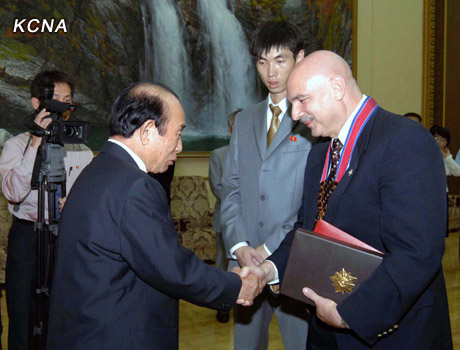
Master (Senior) George Vitale, VIII Dan (A-8-6) of Brooklyn New York was honored with a Doctorate in Taekwon-Do at The Mansudae Assembly Hall which is the Seat of Civilian Government in North Korea Housing the Supreme People’s Assembly. Present there were Vice-Premier Jon Ha Chol, chairman of the State Commission for Conferment of Academic Degrees and Titles of the DPRK, and its Secretary General Kang Chun Gum, Chang Ung, President of the ITF, Kim Kyong Ho, chairman of the Korean Taekwon-Do Committee, vice-presidents and executive members of the ITF and martial art officials concerned.
Master Vitale with Doctorate Medal & Certificate presented by DPRK
Master Geroge Vitale being congratulated by Grand Master Leong Wai Meng (Australia) with I.T.F. President Chang Ung in background
Master Vitale being conferred Doctorate while Taekwon-Do seniors observe. Grand master Kimm (Hanmudo, Baton Rouge, LA. USA), Grand master Benny Rivera (USA/Puerto Rico), Master Phap Lu (Sec. Gen. ITF, Canada) Grand master Leong Meng and Grand master Jung Woo Jin of Taekwondo Times (Iowa, USA)
Master Vitale with DPRK, I.T.F. and Martial Art dignataries
We are about to embark upon a new era of Board and management leadership at USA Taekwondo. You have already read about the resignation of our current CEO, Dave Askinas and the advent of long-awaited Board elections. These events will play a large role in shaping the future of USA Taekwondo.
The elections had been postponed from last December as the Board believed it necessary to ensure that the elections would be a fair, open and transparent process. There were questions and challenges presented from a number of candidates that revealed the process used in the past was flawed both from a statutory and bylaw perspective.
Upon advice of counsel we postponed the election process until we were sure that the process the Board instituted was free from prejudice and was fair to all. We believe we have that process in place and look forward to membership exercising their voting privileges to elect a forward-thinking board from among the many worthy candidates presented. Both the Board and Dave Askinas agreed that it would be appropriate for the new Board to have the opportunity to select their own CEO.
The Board and management have stood up and faced a number of challenges the past few years. The latest challenges include a challenging cash flow situation caused by slow payment or non-payment from USAT vendors. A small organization such as USAT was not well positioned to withstand the effects of a slow economy compounded by vendors’ lack of payment. We have implemented contingency plans to tide us over until we can build up sufficient cash reserves for the future. We are confident that these steps will help ensure the viability of USAT for many years to come.
Another challenge we faced was a series of audit related problems with the USOC. Our required reporting and accounting procedures were unfortunately not being followed with the kind of rigorous attention that was necessary. The USAT Board, particularly through its Audit Committee, discovered these problems in the 4th quarter of 2010 and met with the CEO to discuss solutions. A joint decision was made to dismiss the then CFO and a new CFO was brought in to remedy the issues. These audit issues were remedied but unfortunately the USOC audit focused on the period of 2010 prior to the replacement of the then CFO. We are again confident that the accounting systems now in place are rock solid and that our financial house is in order. It is important to note that there were never allegations of misappropriation of funds. This was a situation of inadequate reporting and inadequate controls and not that of theft. While we did not agree with some of the USOC Audit findings we believed the best approach was to implement all of their recommendations and so we did. USAT continues to receive outstanding financial support from the USOC. The misinformation circulated on the internet regarding a change in our NGB status is just that, misinformation from those individuals with private agendas. Funding received by USAT from the USOC during the most recent 4-year period exceeded amounts received in previous periods. In 2010 Taekwondo was placed in the category of sports expected to medal.
This category receives great consideration from the USOC when funding allocation decisions are made. We expect to perform at a high level at the London Olympics.
Despite these issues USA Taekwondo has many accomplishments over the past few years. The revitalization of the state associations has led to major increases in event participation and membership numbers. These increases exceed 20% and demonstrate that USAT is moving in the right direction. We are at approximately 14,500 individual members and that is our highest membership total since 2005. This is despite the worst economic downturn in the U.S. since the Great Depression.
The state organizations will play a larger role in program delivery in the coming years. Athlete, coaching and referee seminars will be professionally delivered at the state level starting in late 2011 into 2012. We see this as an important means to making quality programming available to a greater number of Taekwondo professionals.
We have achieved great success in major international competitions at the Junior and Senior Levels. From 2006-2010 we either maintained a top-5 or top-10 ranking in the world. Three Olympic medals were won in Beijing putting us in an elite class of nations. The many young senior athletes and junior champions coming through the ranks will begin to make their mark in 2012 and years to come.
The two premier events operated by USAT are experiencing substantial growth. The U.S. Open now regularly attracts the best athletes from around the globe. The number of participating coaches and athletes total between 2200-2600 in a given year. The combined Junior and Senior National Championships continue to grow with close to 4000 participants in a given year.
Under the leadership of Referee Chair John Seiber and his Assistants we have expanded the scope and quality of our referee training. This translates directly to better events for our members. National referees are graded annually and appointments are based upon those grades. Accountability is the byword.
We have expanded delivery of poomsae training for both competitors and referees. There are more and more seminars being offered around the country by top flight professionals in our sport. This will continue to advance the sport of poomsae in this country.
On the high level competition side we created the first National Team coaching structure in USTU and USAT history. We were of the firm belief that sustained competitive excellence could not be achieved unless we abandoned the concept of appointing coaches merely on an event-by-event basis. Our National Team coaches not only coach junior and senior teams at international events but they also write curriculum for our coaching courses, instruct in those coaching courses, and work USAT athlete camps to help further develop our future champions. A staff of 15 assistant National Team coaches assists in all of these efforts. We will look to expand that coaching staff by seeking new additions to that staff this fall.
These are just a few of the programs we have worked on during the tenure of this Board and that of Dave Askinas. We are proud of the foundation we have built together and look forward to the new Board and new CEO taking this organization to new levels of excellence. The new Board will conduct our national search for a new CEO. Dave Askinas will continue to work with the Board on a consulting basis so that the new CEO and Board can hit the ground running.
I cannot conclude this message without stating that one major challenge we face as an organization is a cultural shift in how we handle disagreement with Board and management actions. There continues to be a small minority of members who cannot seem to find a way to civilly disagree within the organizational structure. Some of this is an unfortunate consequence of the internet age we live in where the proliferation of misinformation and vitriol is the norm and civil debate becomes impossible. Keep in mind that the USA Taekwondo website is the only official source of information on USA Taekwondo. Any contradicting information found on other websites likely comes from a biased viewpoint of the publisher. The amount of time that management and the Board have had to spend on refuting false allegations is staggering. Quite frankly, the cost to this organization in time, money and emotional exhaustion cannot be measured. We will continue to struggle with attracting quality candidates to serve on Boards and Committees because of the culture of animosity that is encouraged by certain individuals.
The real answer is for people to become part of the solution rather than part of the problem. We have to learn to disagree without spreading venomous misinformation. We must create a culture of upstanding conduct and integrity. Quite simply, we must live up to the tenets of Taekwondo.
I want to close by thanking you for allowing me the opportunity to serve as a member of the Board of Directors. It has been an often difficult but ultimately rewarding experience helping this organization. I look forward to continued service in a different role in years to come as USAT keeps an athlete-centered theme going into the London Games and beyond.
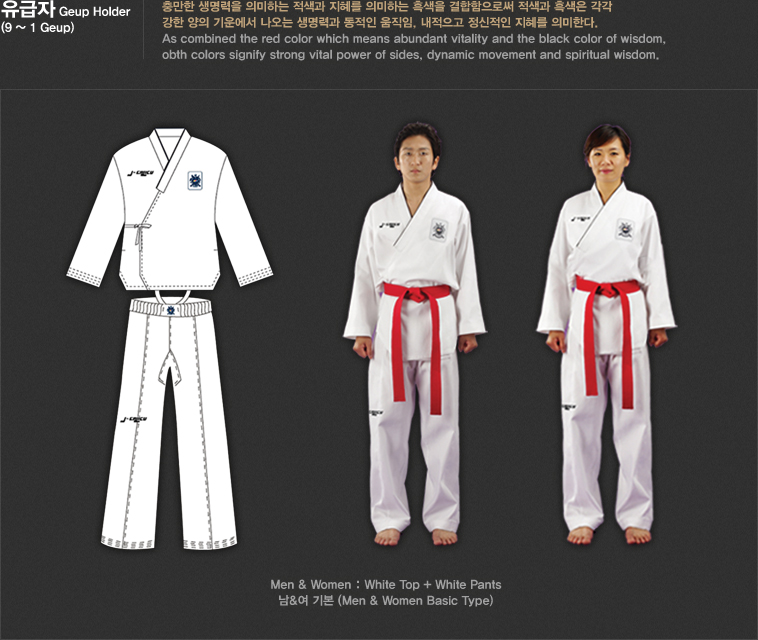
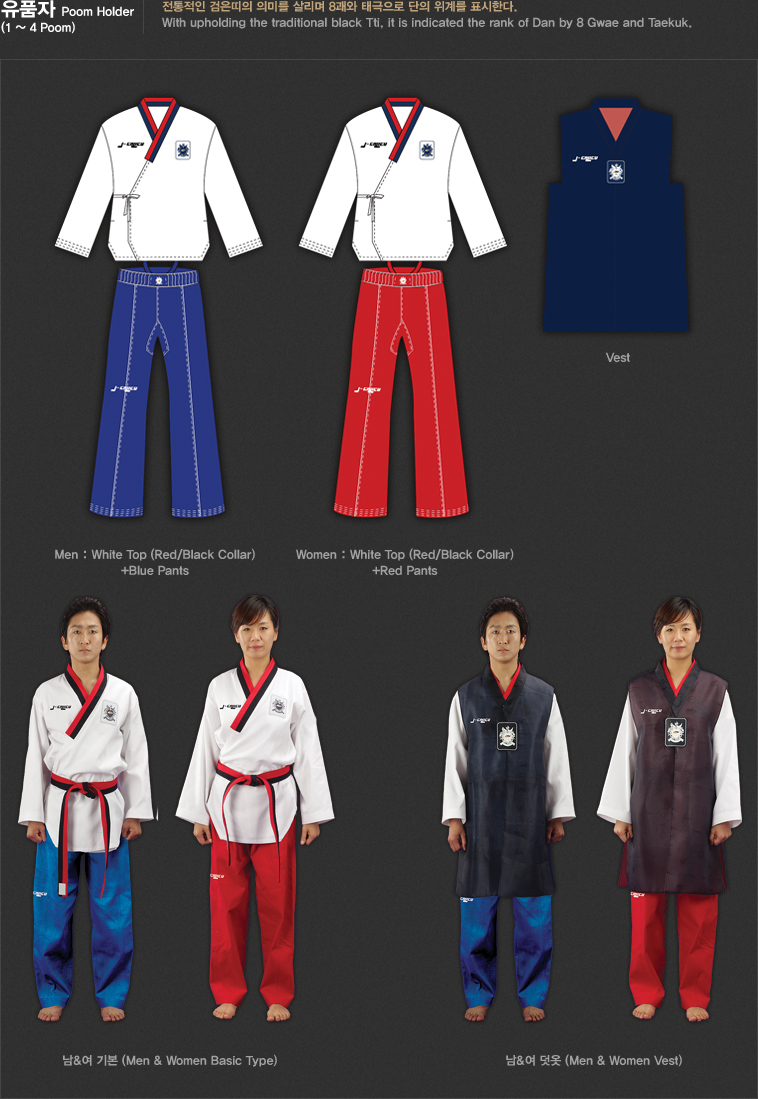
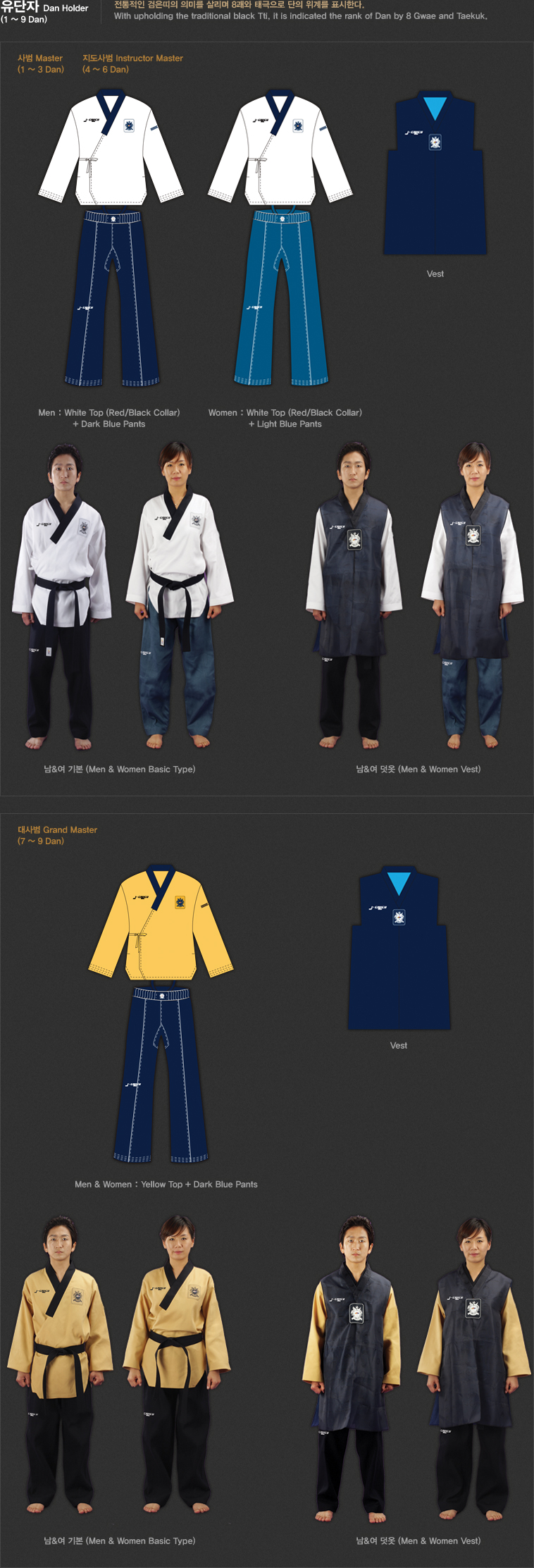
Development of the New Taekwondo Uniform and the Emblem
We aim to visualize the philosophical history of Taekwondo by using Korean traditional images, patters and colors in the new
Taekwondo uniforms to maintain the uniqueness of Korean Traditional clothing. In addition, we considered the practical design
aspects of the new Taekwondo uniform.
The Symbolic Meaning of the Colors
To emphasize the philosophical history of Taekwondo we adopted Ohbangsaeck which indicates those traditional thoughts and
ideas for Poomsae Gyeonggibok (uniform)and the Emblem.
The Traditional Images and the Patterns
The Samtaeguk, Ilwolsangmun, Sashindo, (three Korean traditional patterns) are representative of Emyang Ohhaengseol as well
as the Korean native thoughts used for Taekwondo?s image consulting.
WTF Mark, Logo
Three colors consist of ?Chunjiin?(heaven, earth, human) thoughts, which represent the universe.
?T? reveals the substance of Taekwondo and energy, also ?W? and ?F? have the future oriented thoughts of the world Taekwondo
people in the Five Continents.
System of Taekwondo Gyeonggibok (uniform of Taekwondo)
Compartment of Gyeonggibok
Geup holder
9~1
Ranks of ?Geup? is ordered by 9 to 1. The beginner is ?Geup?9 and the progression can be declined or advanced by
examinations. Also, belt colors are classified by the progression.
Poom holder
1~4
Arranged by ?Sasang?(four images-indicate 1 to 4 ?Geup?) at the right end of red and black colored belt.
Dan holder
Indicated 8 ?Gwae? (trigram) at the right end of belt
By Yi Whan-woo
Choue Chung-won
Choue Chung-won, the president of the world’s taekwondo governing body, said earlier this month that new uniforms to be featured at the international poomsae championships will represent Korea in a new way.
The 63-year-old Choue and the World Taekwondo Federation (WTF) have worked on introducing the new uniforms, to replace the existing “gyorugi” ones at the World Taekwondo Poomsae Championships starting on July 29 in Vladivostok, Russia.
“This will be the first time the athletes will wear the new poomsae uniforms from the WTF, and it will be a meaningful event,” Choue said.
They are designed by Kim Nam-hee, recognized as a designer of traditional Korean clothes
Choue said the poomsae uniforms will show how practical Korean clothing is despite its beautiful and luxurious design. He also added it will be a chance to promote the nation’s traditional clothes.
Over a decade of taking part in poomsae competitions in the gyorugi uniforms, the WTF president took an active role in the poomsae development committee set up in 2006 to create a new uniform.
The new J-Calicu uniforms, named after a local producer that was given an exclusive rights to provide the clothing for the Vladivostok competition.
They define the new system of the poomsae world, according to Choue. The uniforms represent the different levels and are divided according to traditional Korean philosophy along with the five tenets of the sport.
They also consider eye-catching performances of the athletes by applying “po,” or an outer jacket, on top of the uniform. The po is to create sound and also to show the dynamic expression of taekwondo moves.
“The new uniforms should continue to be developed. We will listen to the participants’ suggestions including complaints, reactions of people, and all other matters during the Vladivostok competition,” Choue said.
“The ideas will be considered and applied in future editions,” he added.
The WTF plans to provide the new uniforms to master-level, or high-dan holders, free of charge at the upcoming event.
Choue’s creativity was shown from his emphasis on fashion in sports.
“Just like tennis or golf, the taekwondo uniform now embraces the fashion era,” he said.
“People from all over the world are now wearing the uniforms. It must satisfy people. There is no point applying the Korean spirit if people are not wearing them. Selfish ideas (pointing out Korean style only) are not right. We must level ourselves with the world.
“I hope that the taekwondo clothing, whether gyorugi or combat uniforms or advanced poomsae uniforms, will be turned into a fashion brand and become a trend leader for all including non-taekwondo people.
He also hinted at a wider use of the uniforms in other competitions, such as the 2017 Universiade as well as future Olympics.
It is with great sadness that we lost Miss Kendal Murphy at 930am (local time) to complications of Septic Shock. Miss Murphy was a 1st Grader, and was always happy, and eager to learn. She was a class leader and will be missed!
2 visitors online now 1 guests, 1 bots, 0 members Max visitors today: 796 at 11:39 am UTC This month: 796 at 03-18-2026 11:39 am UTC This year: 796 at 03-18-2026 11:39 am UTC All time: 796 at 03-18-2026 11:39 am UTC

 0
0
 0
0
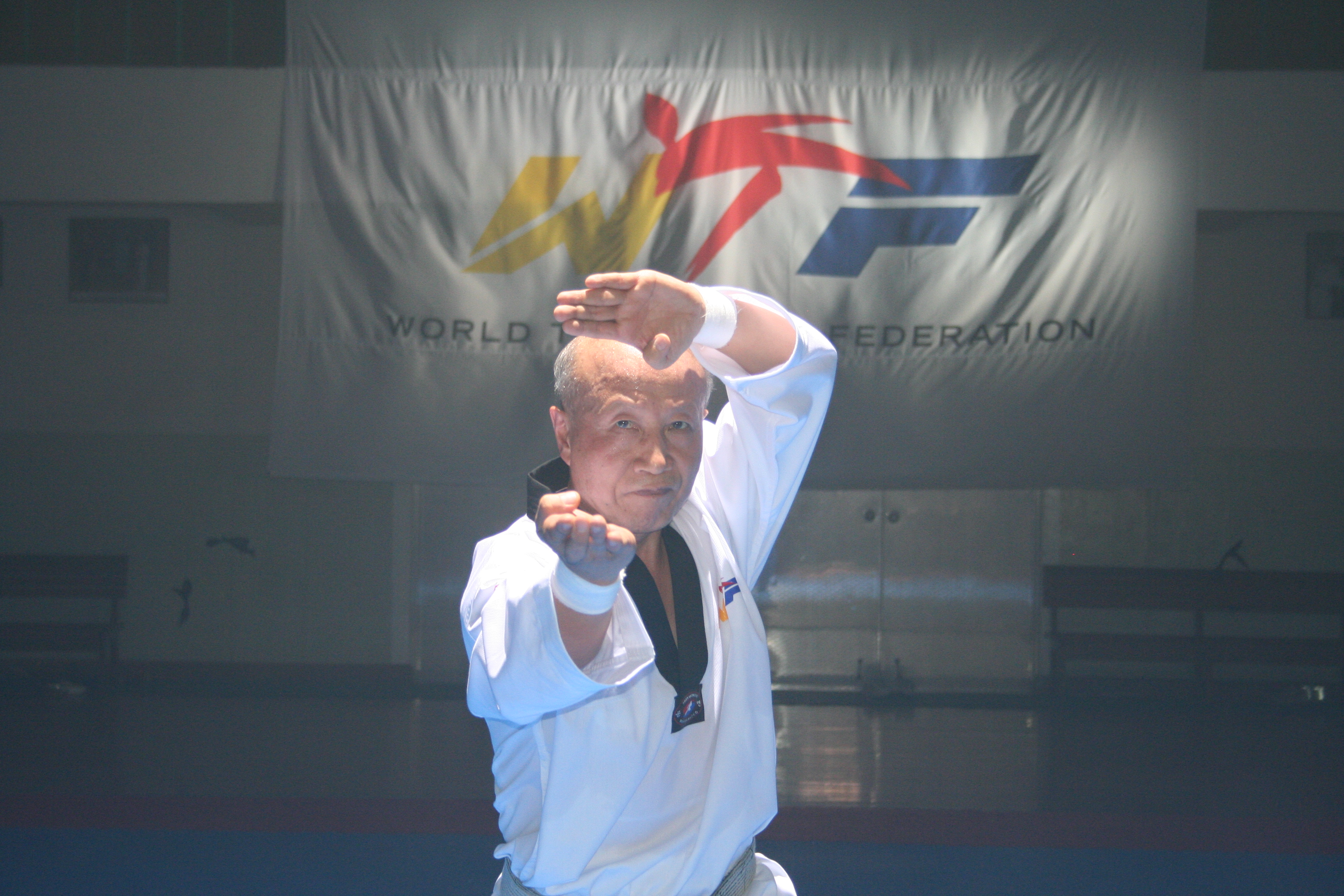


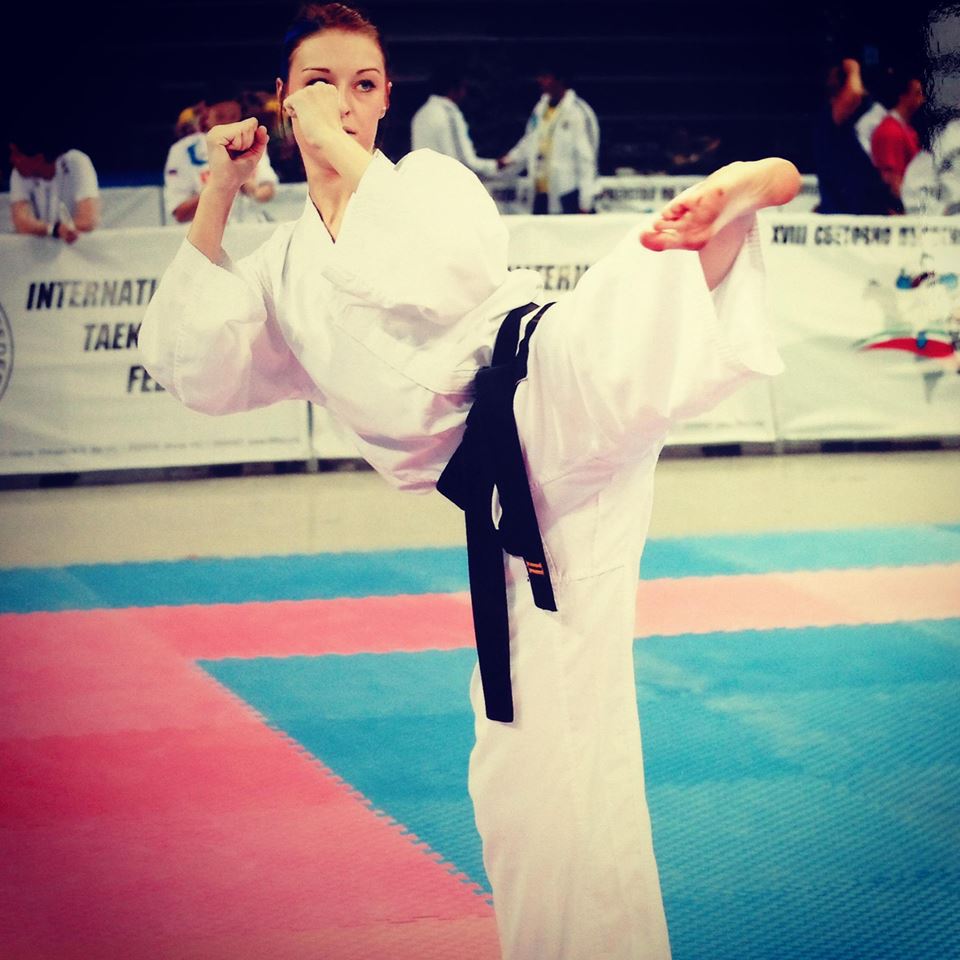
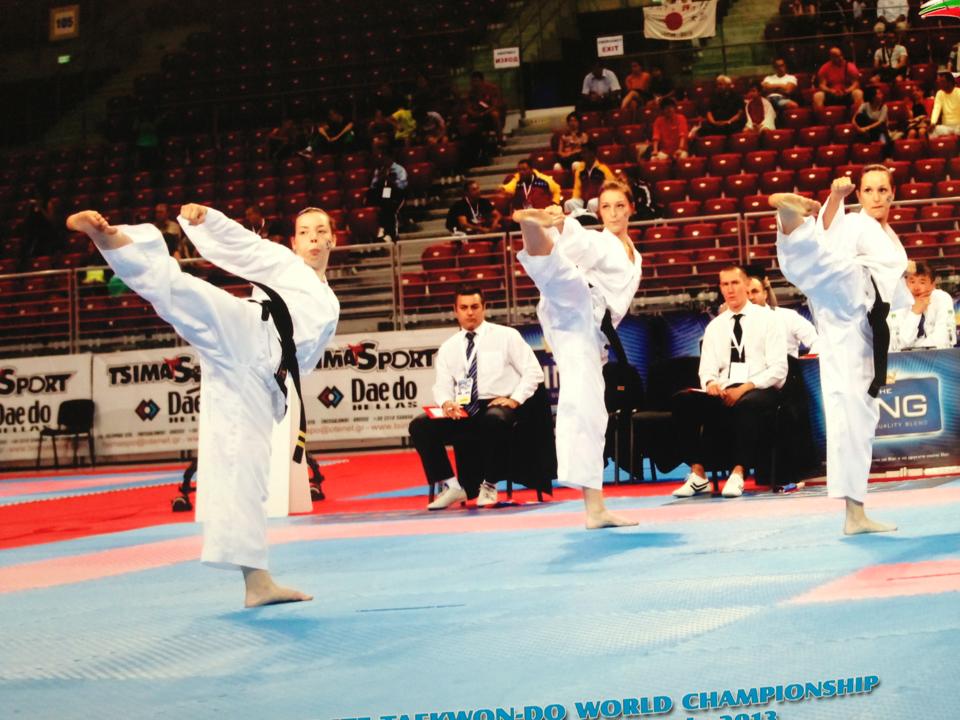
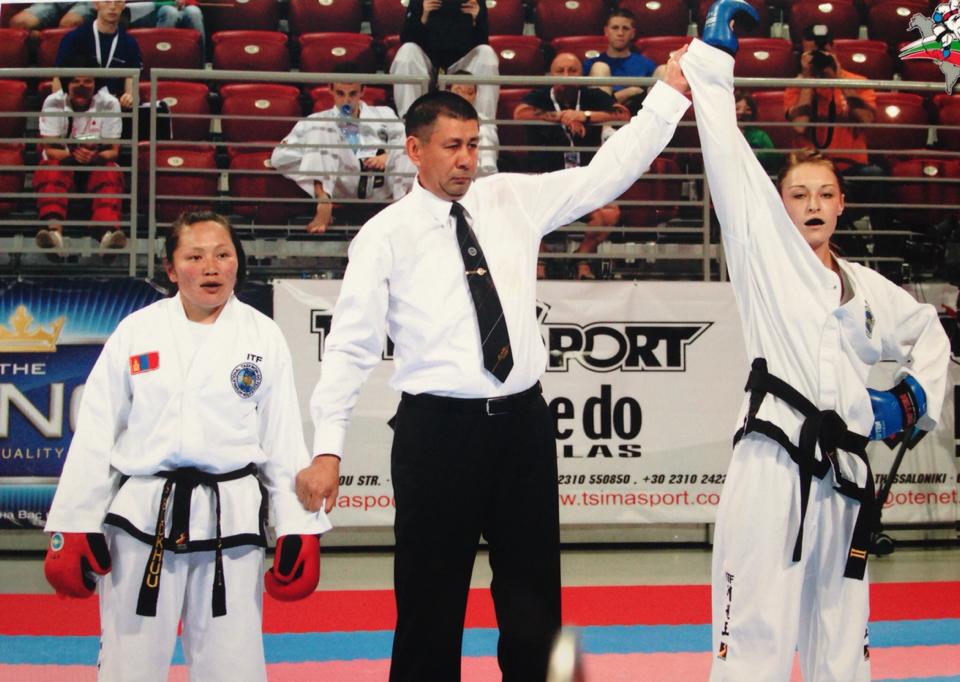
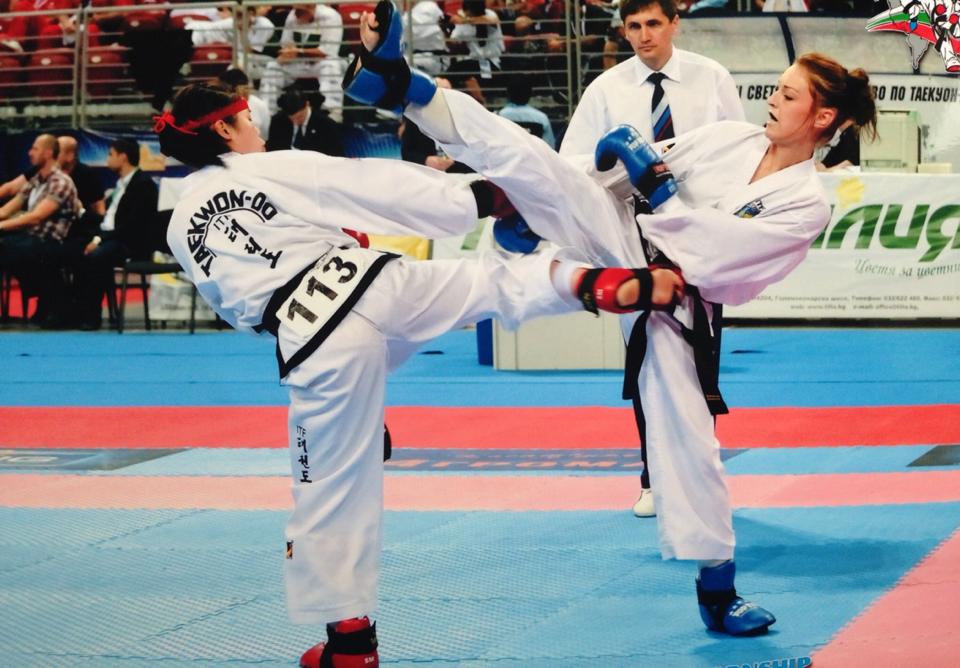
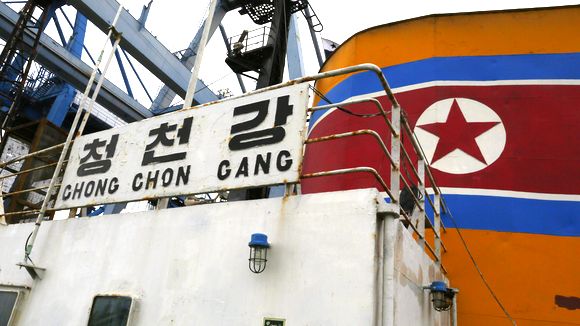

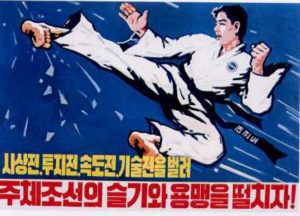
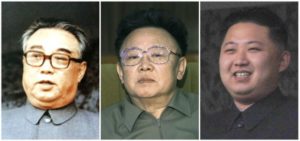
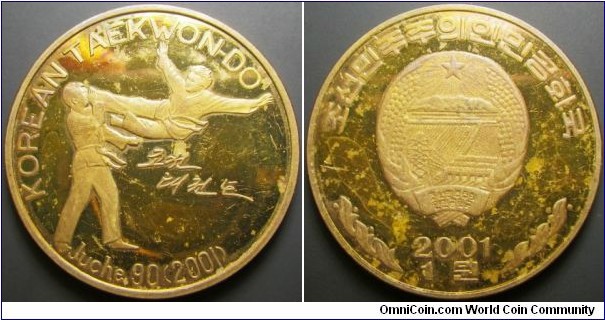
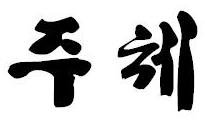
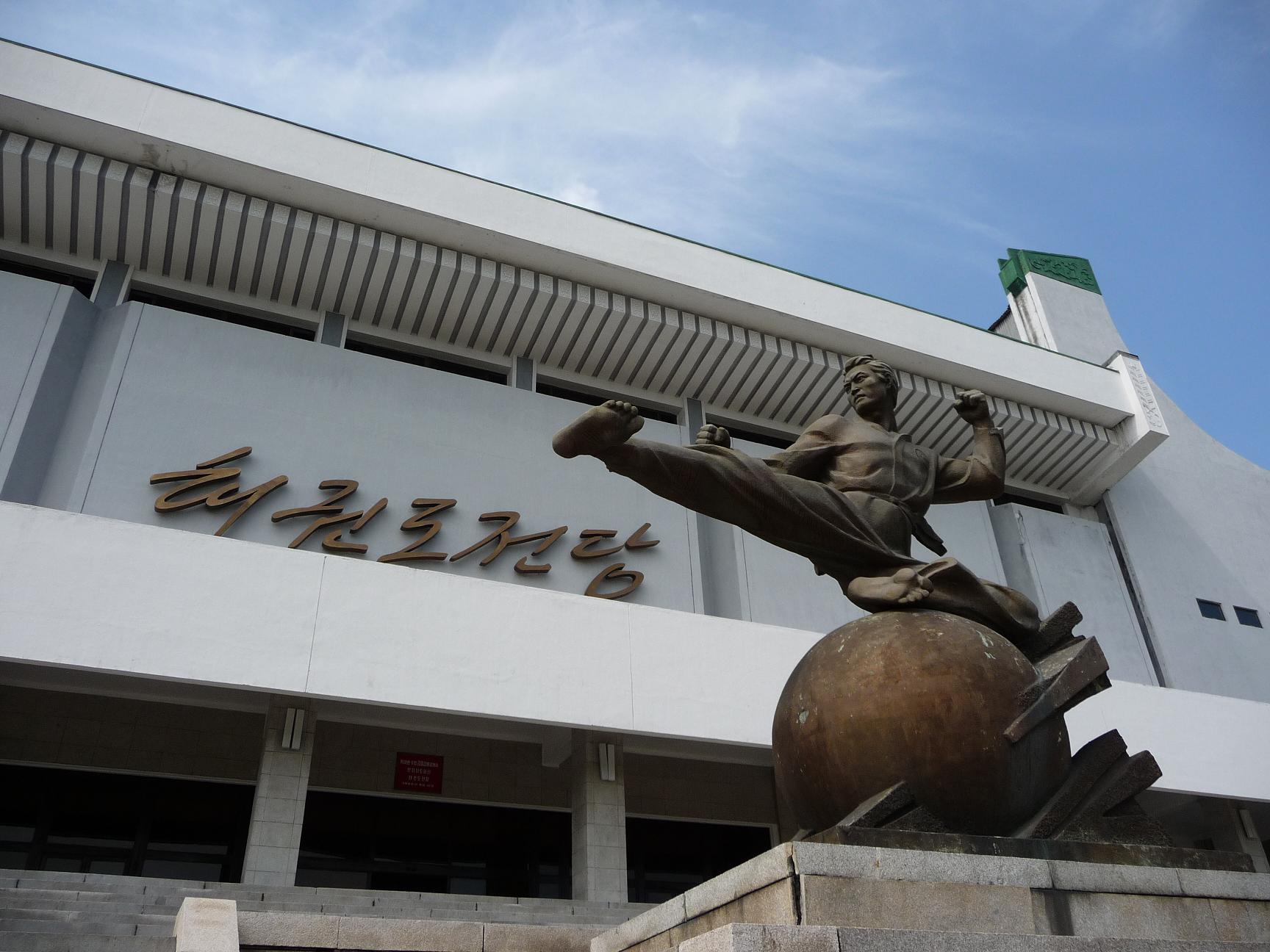
.jpg)